 Neighborhood Guides
Kamo River: Kyoto's Living Room — A Riverside Guide
Kyoto's living room: the Kamo River walk from the turtle stones to Pontocho, best photo spots, when to go, and how it fi
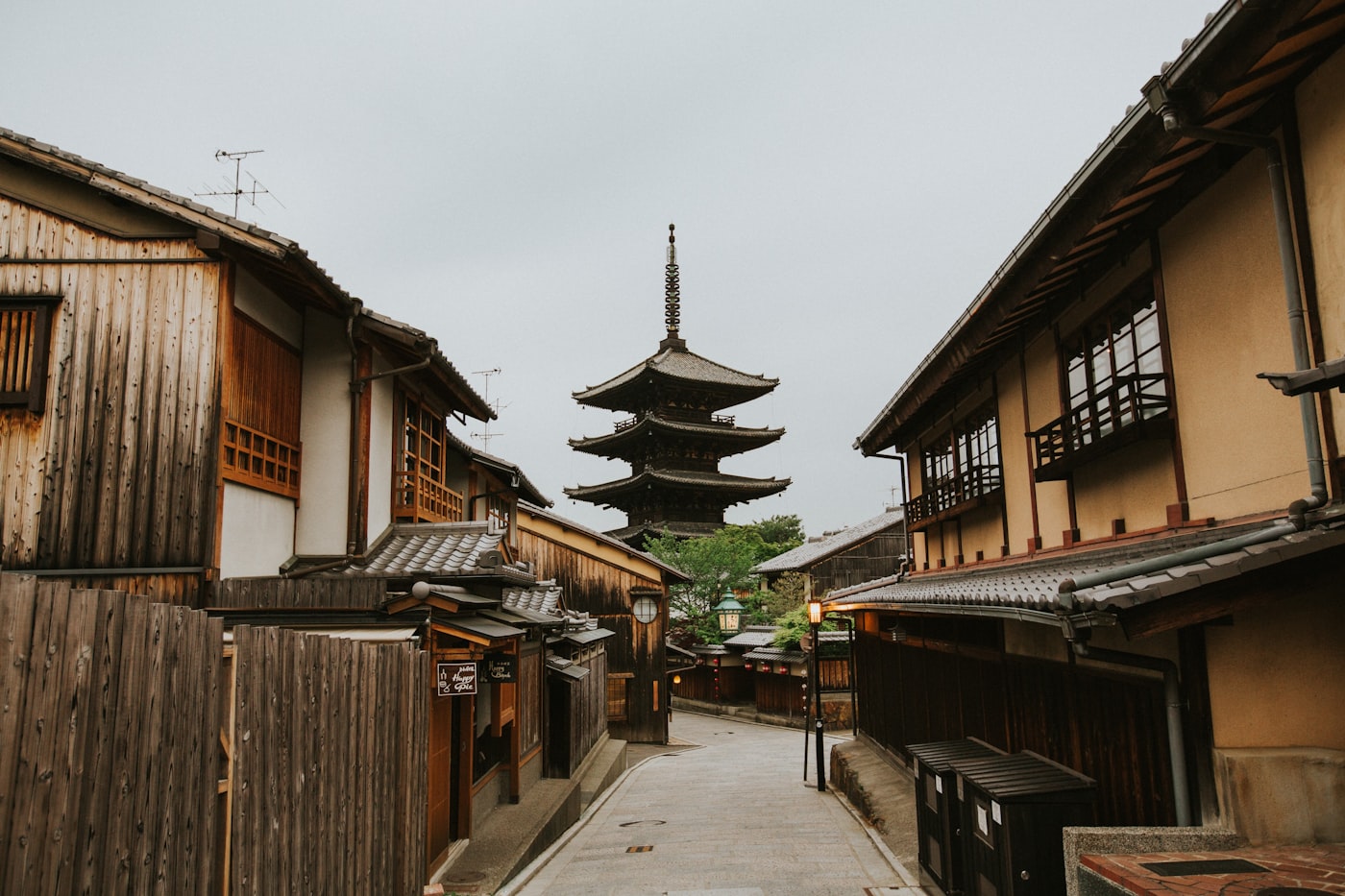
Wooden teahouses, lantern-lit lanes and the mysterious world of geiko and maiko. This guide goes beyond the postcards: how the hanamachi system works, where and when to spot geiko with respect, what Pontocho is really for, and how to plan an unforgettable evening.
Gion is Kyoto's best-known geisha district — a hanamachi ("flower town") where the geiko (geisha) and maiko (apprentice geisha) of the Gion Kobu and Gion Higashi communities have entertained guests for centuries. It grew up around Yasaka Shrine (once called Gion Shrine) as the entertainment quarter of the temple's festival district, and by the Edo period the ochaya — teahouses where geiko pour sake, play shamisen and lead conversation — were a fixture of Kyoto high society. Today it is a living neighborhood, not a theme park: the ochaya are real businesses, the kimono-clad women are real professionals heading to real appointments, and the wooden machiya houses are homes and restaurants. That is exactly why walking its streets is one of Kyoto's most atmospheric experiences — and why a few simple etiquette rules matter.
Gion is actually two separate hanamachi: Gion Kobu (centered on Hanamikoji and the Kaburenjo theatre) and the smaller Gion Higashi (around the eastern end near Yasaka Shrine). You can't tell them apart from the street, but it explains why you might see different kimono styles — and why the geiko are often photographed crossing between the two areas around 17:30–18:30.
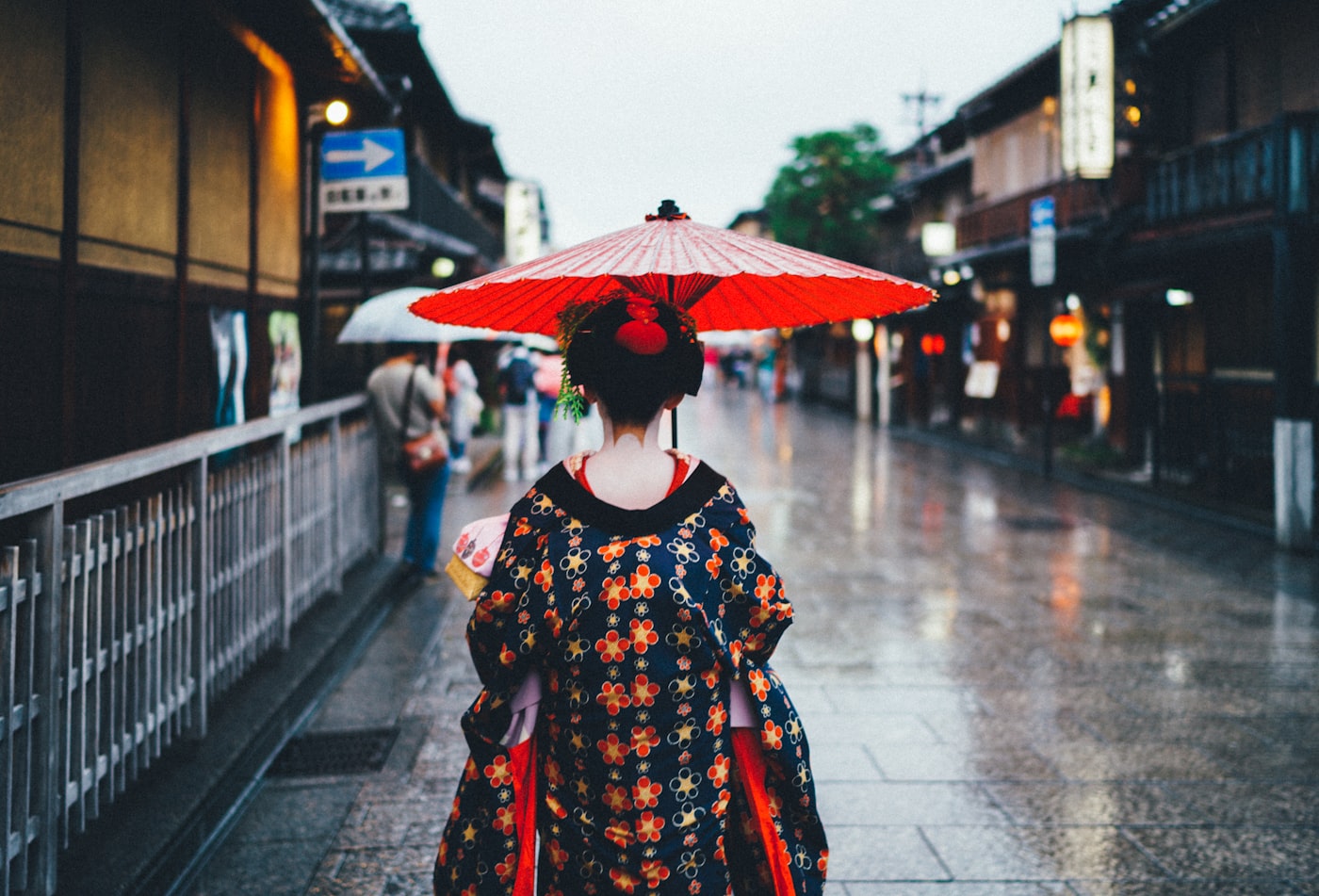
Hanamikoji ("flower-viewing street") is Gion's most famous lane: a straight run of wooden machiya facades, teahouse signs and the occasional glimpse of a maiko hurrying between appointments. The street runs north from Shijo-dori for about 350 meters, and the best approach is slow: look up at the lattice fronts, notice the seasonal decorations hanging in each doorway, and understand that every teahouse sign you pass belongs to a working establishment. In the late afternoon the street comes alive as geiko leave the ochaya for evening banquets — this is the best free "geisha show" in Kyoto. The side lanes off Hanamikoji are quieter and equally beautiful, with tiled roofs, lattice doors and small shrines tucked between the houses.
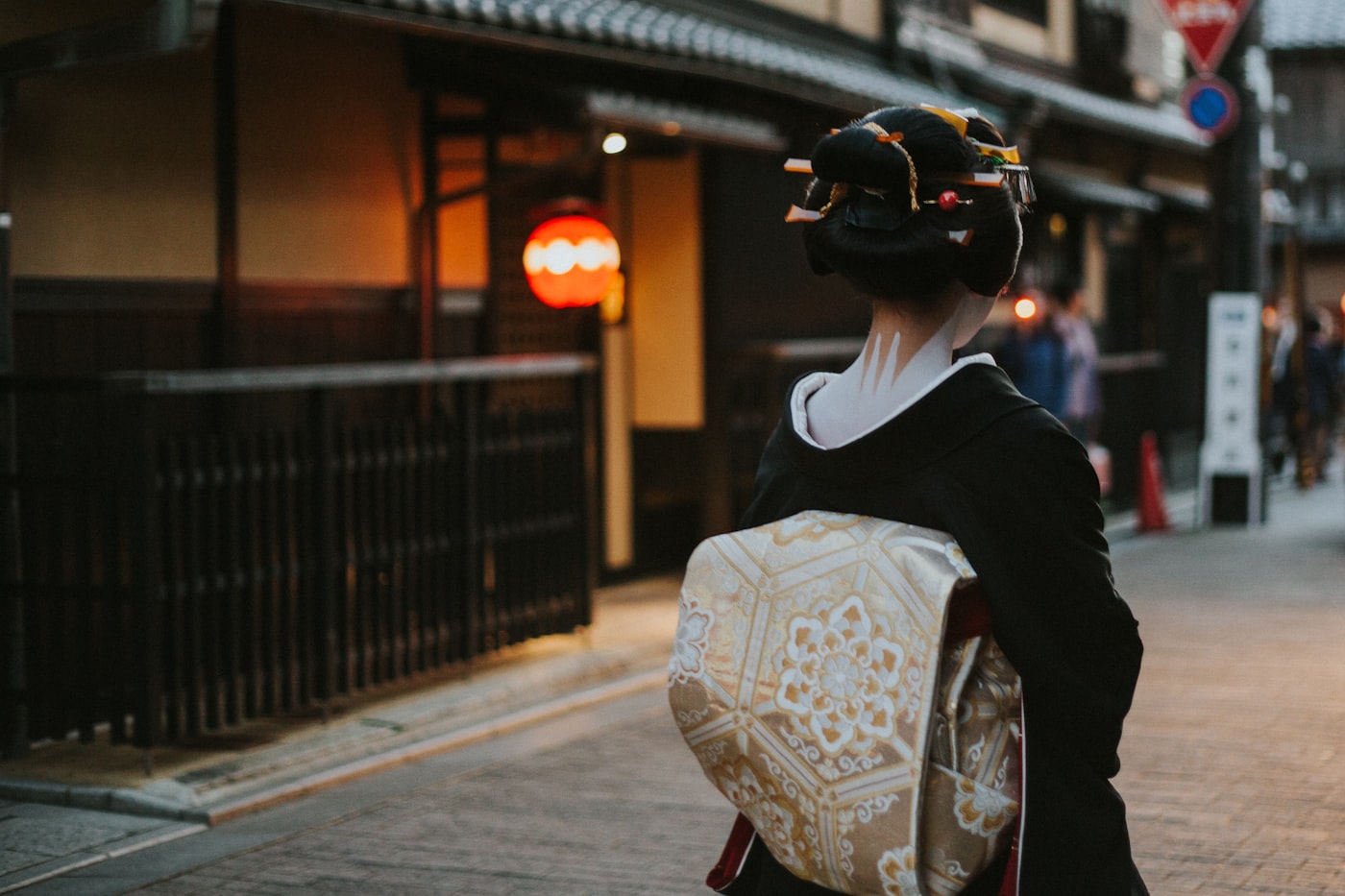
The most reliable geiko-sighting stretch is Hanamikoji between Shijo-dori and Ninenzaka, plus the corner by Kaburenjo theatre. Early evening is the commute — and remember, a respectful distance and a nod is exactly right; never block their path or chase them for photos.
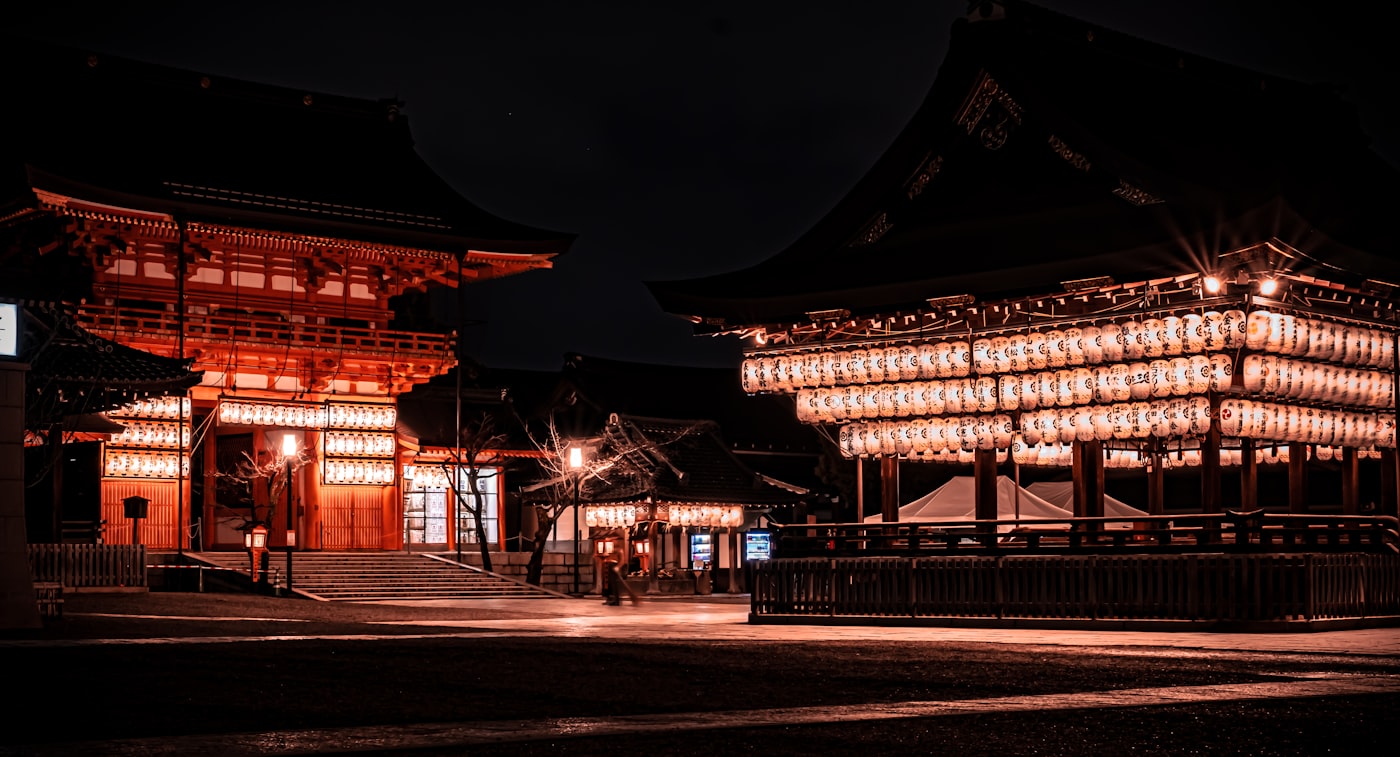
At the eastern end of Gion stands Yasaka Shrine — once called Gion Shrine, and the reason the whole district has its name. It is the home of the Gion Festival, held every July when enormous mikoshi (portable shrines) parade through the neighborhood, and one of Kyoto's oldest shrines. The grounds are free and open around the clock, the lanterns glow beautifully after dark, and in April the shrine is one of Kyoto's classic cherry-blossom settings.
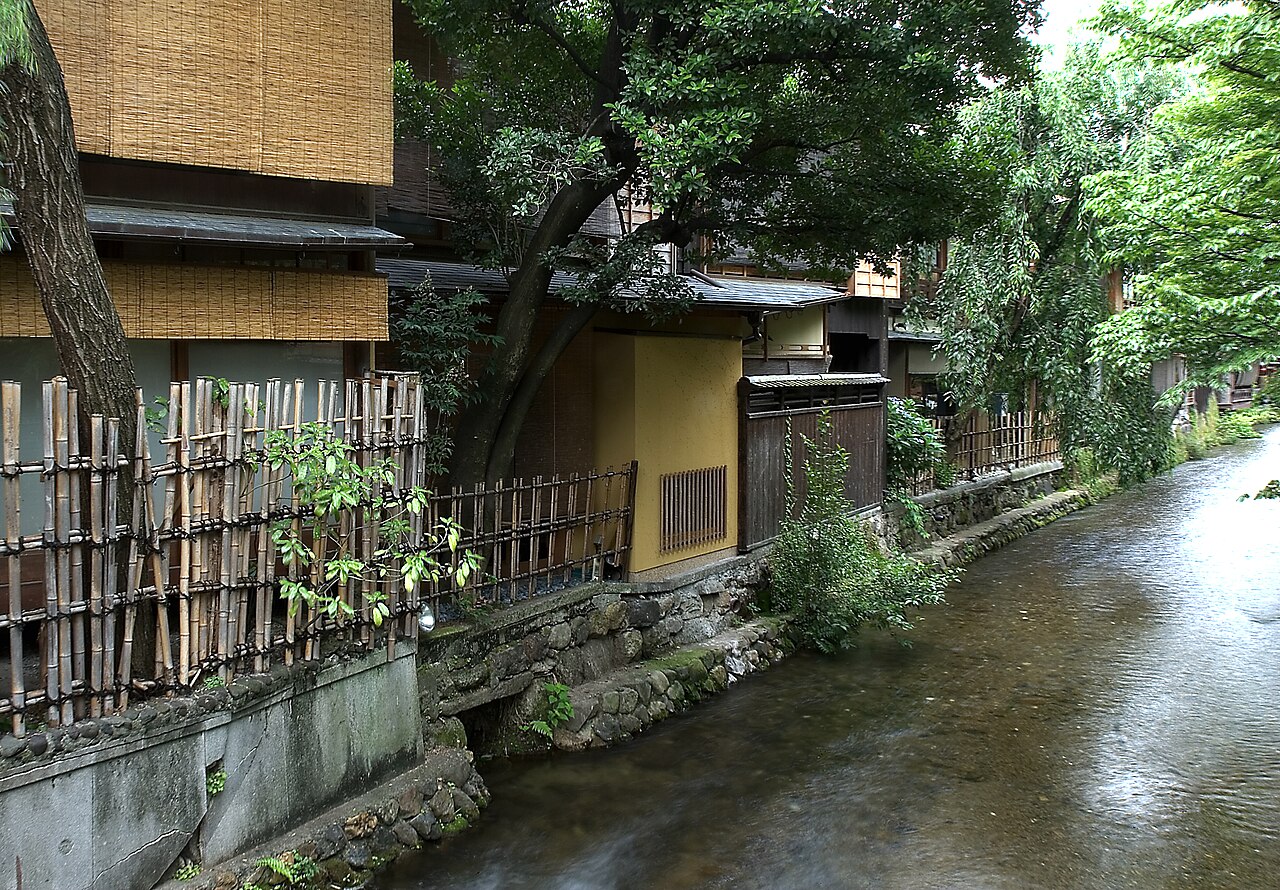
At the north end of Gion, the Shirakawa canal bends past willow trees, tiny bridges and machiya restaurants with riverside decks. This was the old entertainment edge of the district — geiko and their clients crossed the canal to reach the teahouses, and the area still carries that evening atmosphere. Tatsumi Bridge — the stone bridge beside the white-washed Tatsumi Shrine — is the most photographed corner in the district, especially at dusk when the lanterns come on and, if you're lucky, a maiko crosses on her way to an appointment.
Founded in 1202 by the monk Eisai, Kennin-ji is the oldest Zen temple in Kyoto — and it sits right in the middle of Gion, a five-minute walk from Hanamikoji. Inside, look for the giant twin-dragon painting that covers the ceiling of the main hall (painted in 2002 by the Japanese artist Kojima Junzo), and the tranquil karesansui (dry landscape) garden. It is a surprising pocket of stillness a few minutes from the crowds (admission charged).
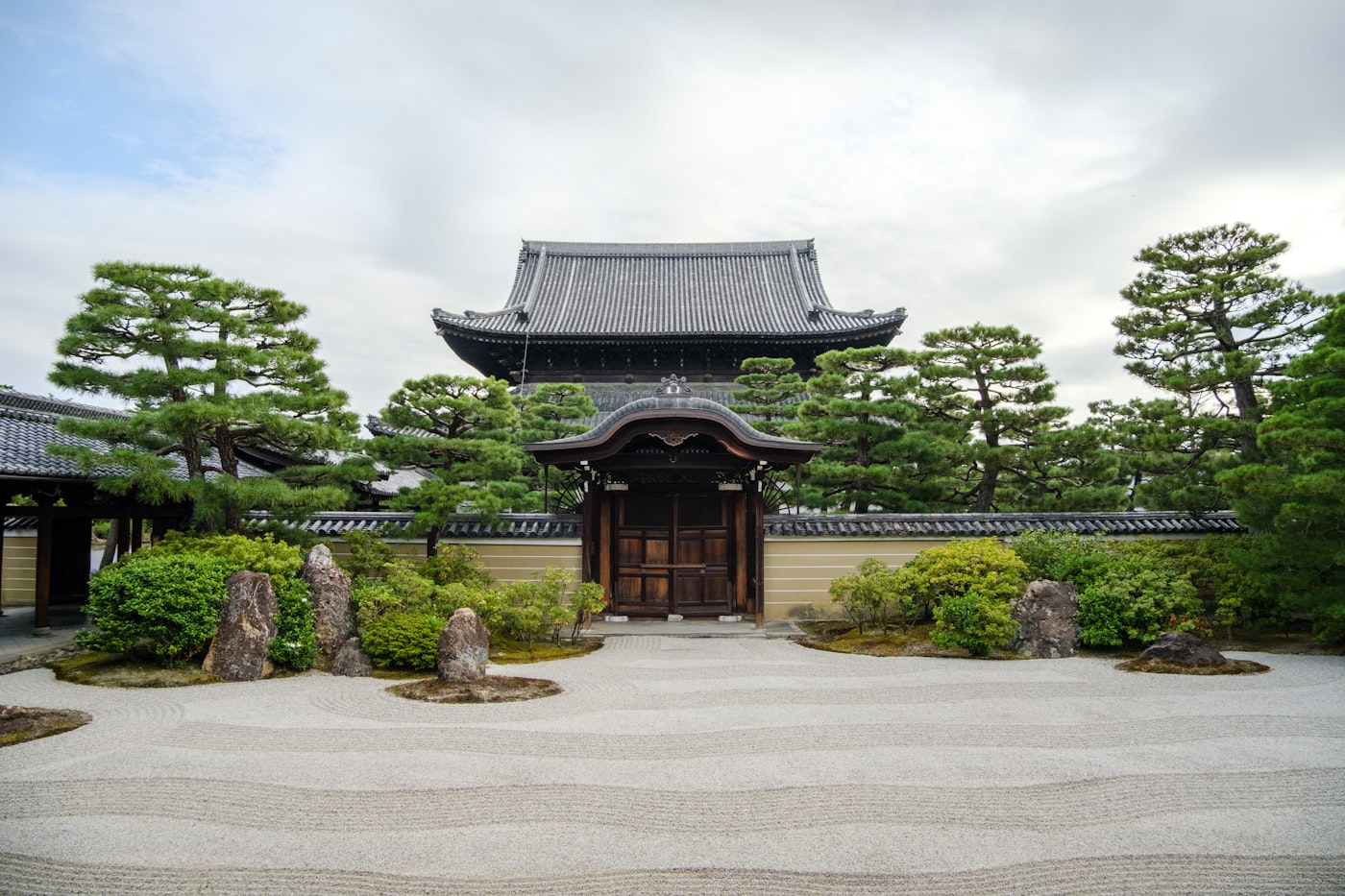
If a geiko pauses and acknowledges you, a single photo from a respectful distance is generally fine — but the moment they turn away or keep walking, put the camera down. In kimono yourself, you'll blend into the street scene in a way that makes the whole experience feel more natural for everyone.
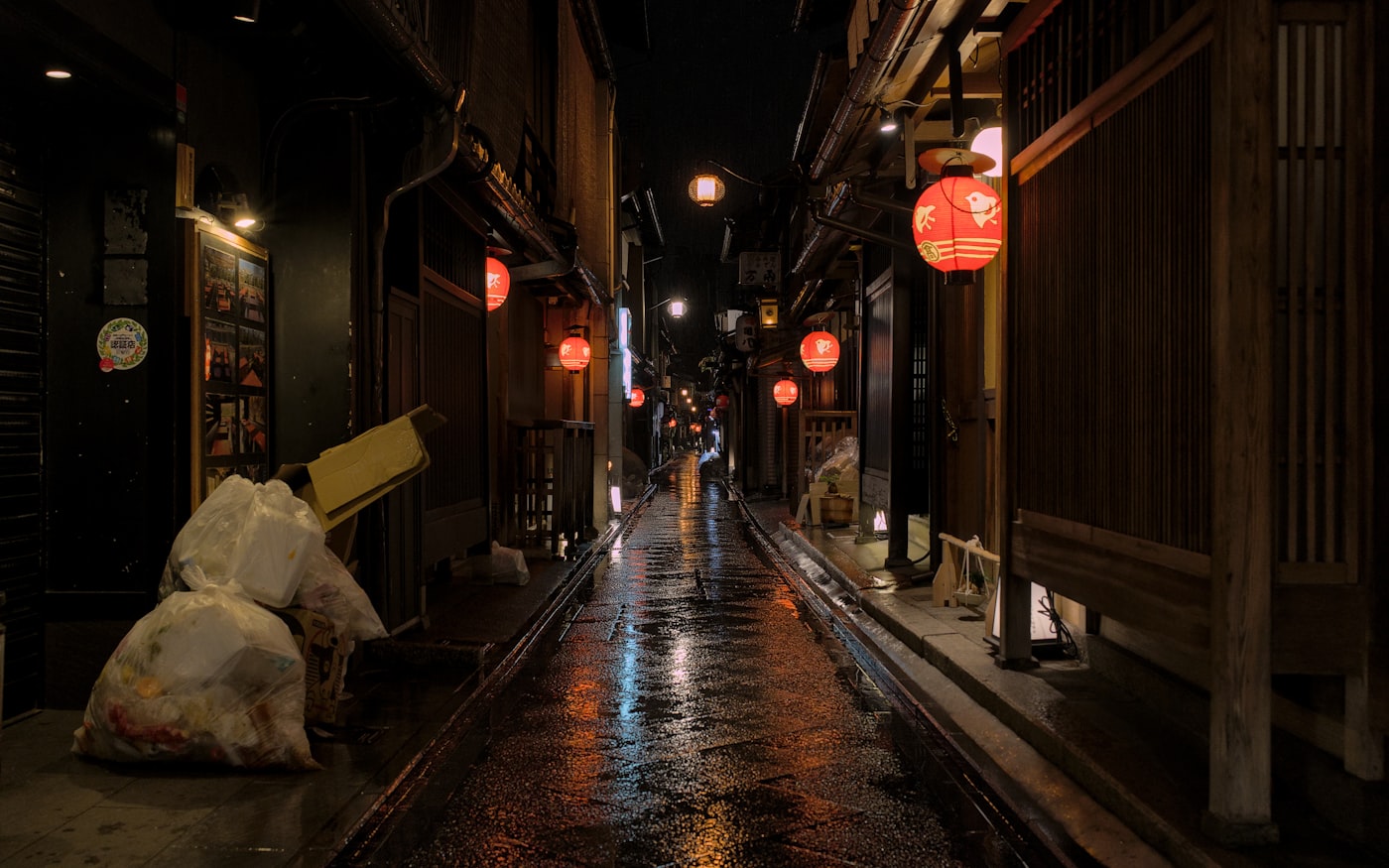
A ten-minute walk from Hanamikoji, Pontocho is a single narrow alley of teahouses, bars and restaurants squeezed between the main street and the Kamo River. It has its own geisha community — the Pontocho kabu — and its own teahouse tradition, but what visitors know it for is food: by day it's sleepy; by night it's one of Kyoto's most atmospheric dining streets, with lanterns, cooking smells and the occasional geiko slipping between establishments. In summer, several restaurants set up kawadoko (riverside terraces) over the Kamo River, and the alley's riverside windows glow with candlelight.
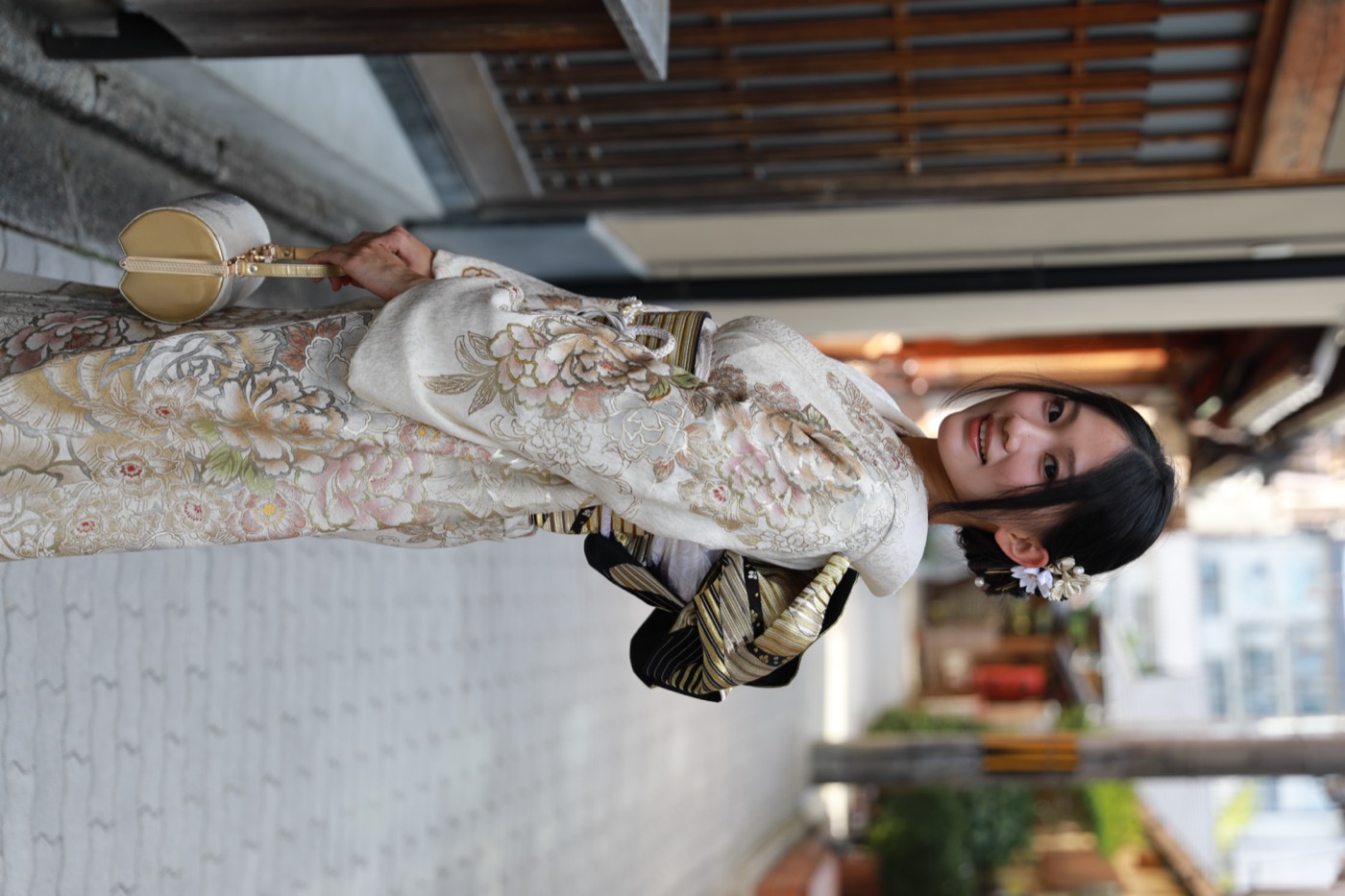
Gion's wooden streets and teahouse lanes are made for kimono — and Kanwa Kyoto's Yasaka store is right in the heart of the district, on Tsukimicho a short walk from Yasaka Shrine and Hanamikoji. Pick up a kimono in the morning, explore Gion and the nearby Higashiyama sights, and return it the next day. A word from the shop: the 17:00–18:30 window on Hanamikoji is when kimono visitors get the best street photos — plan your rental around it.
| Time | Plan |
|---|---|
| 16:00 | Yasaka Shrine — start at the eastern end of Gion |
| 16:30 | Hanamikoji at golden hour; browse the side lanes |
| 17:00 | Kennin-ji — the quiet Zen pocket before closing |
| 17:30 | Back on Hanamikoji — the best window for geiko sightings |
| 18:15 | Shirakawa canal & Tatsumi Bridge at dusk |
| 19:00 | Dinner in Pontocho — or riverside kawadoko if you booked ahead |
| 21:00 | Lantern-lit walk back through Gion — quieter and just as beautiful |
Pair this with the day-time loop in our Higashiyama district guide — the two sit side by side. More reading: Gion Walking Guide · Gion Matsuri Guide · Kimono Photography
Hanamikoji and the side lanes around it are the best spots. Geiko head to evening appointments around 17:30–18:30, and the Shirakawa canal area is a close second. Watch from a respectful distance and never block their path.
Yes — walking the district is free. Kennin-ji temple charges admission, and the ochaya are private members-only establishments, but the streets, Hanamikoji and the Shirakawa canal area are open to everyone.
City bus 100 or 206 takes about 20 minutes to Gion. The Keihan Line stops at Gion-Shijo Station, right at the edge of the district. Yasaka Shrine, Hanamikoji and Pontocho are all within a 10–15 minute walk of the station.
Gion is Kyoto's best-known geisha district. Pontocho is a narrow dining alley beside the Kamo River, famous for its restaurants and evening lanterns — they're a 10-minute walk apart.
Around 17:30–18:30, when geiko and maiko walk from the ochaya to their evening appointments. Hanamikoji and the Shirakawa area are the best spots. After 19:00 you may also see them moving between venues.
Yes, but not by walking into an ochaya — they are private. Book through a reputable agency, a hotel concierge, or a member restaurant in advance. Public alternatives include the Miyako Odori dance performances in April.
Photos of the streets and buildings are fine. Photographing geiko and maiko without permission is not — never chase them or block their path. The lanes off Hanamikoji are largely private; respect the residents' privacy.
Yes — Gion is one of the most popular places in Kyoto to explore in kimono. Kanwa Kyoto's Yasaka store is on Tsukimicho, a short walk from Yasaka Shrine and Hanamikoji, with 500+ kimonos, hairstyling included and next-day return.
Neighborhood GuidesKyoto's living room: the Kamo River walk from the turtle stones to Pontocho, best photo spots, when to go, and how it fi
 Temples & Shrines
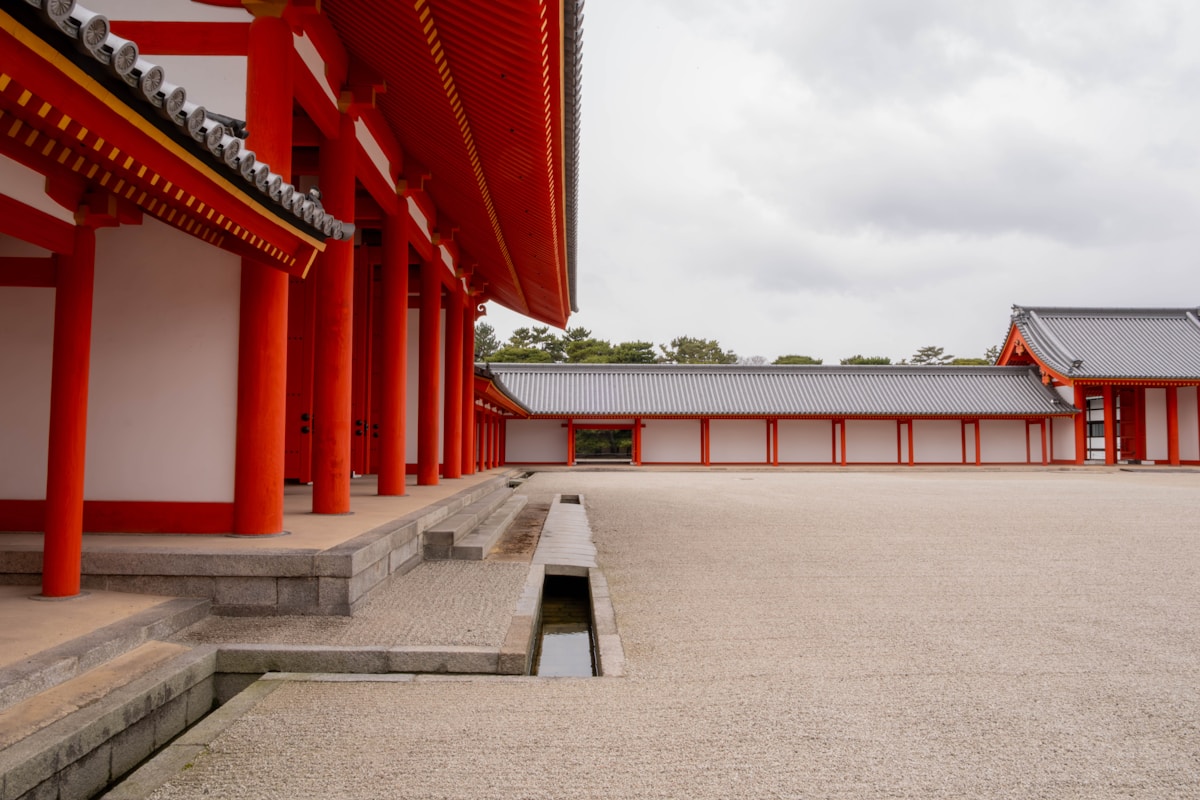
Step inside a hall lined with 1,001 wooden statues of Kannon, each carved in the 12th century and arranged in perfect ro
 Temples & Shrines
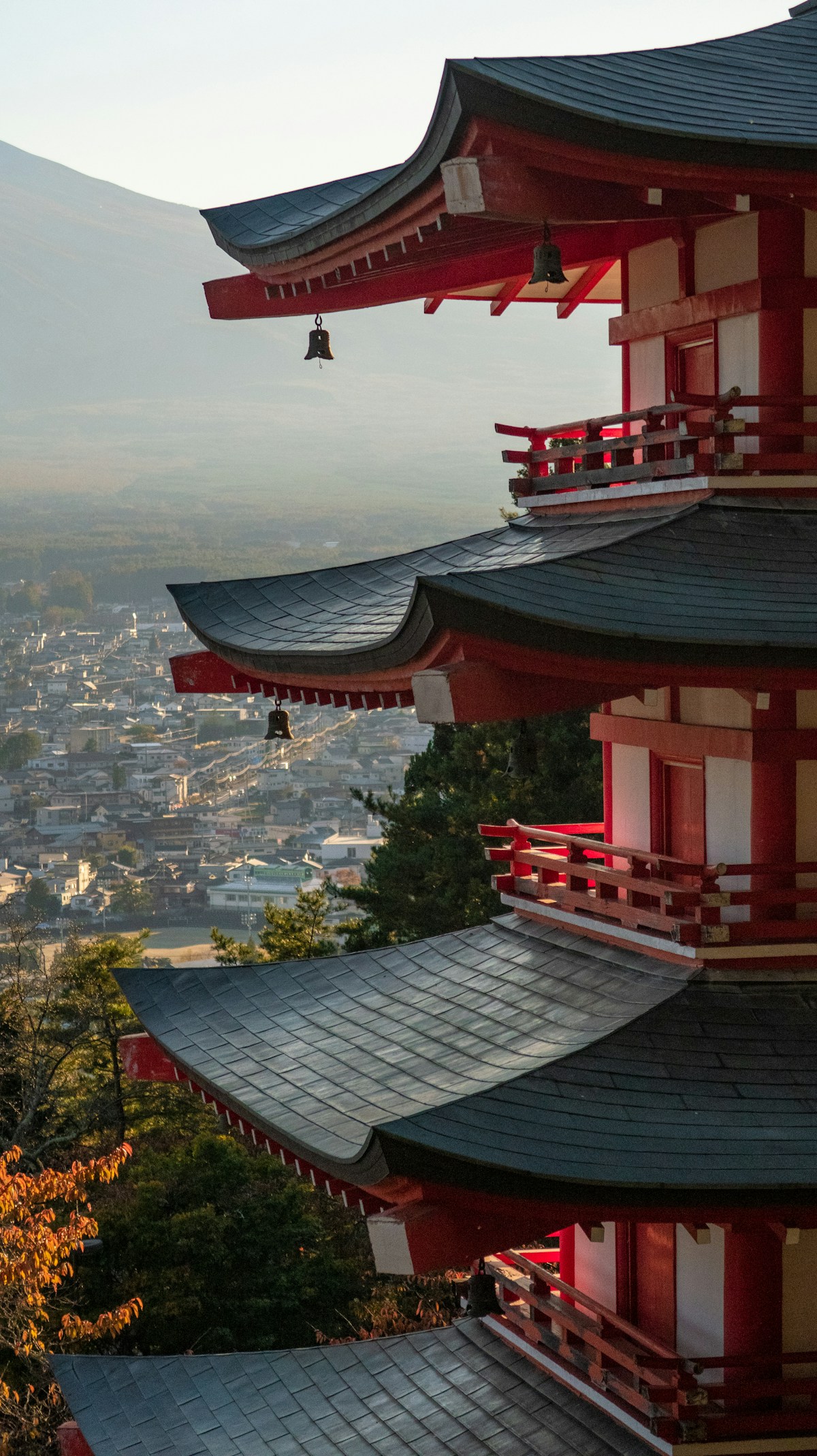
The 54.8-meter five-story pagoda at Toji is the tallest in Japan and Kyoto's most recognizable silhouette. But behind th
 Temples & Shrines
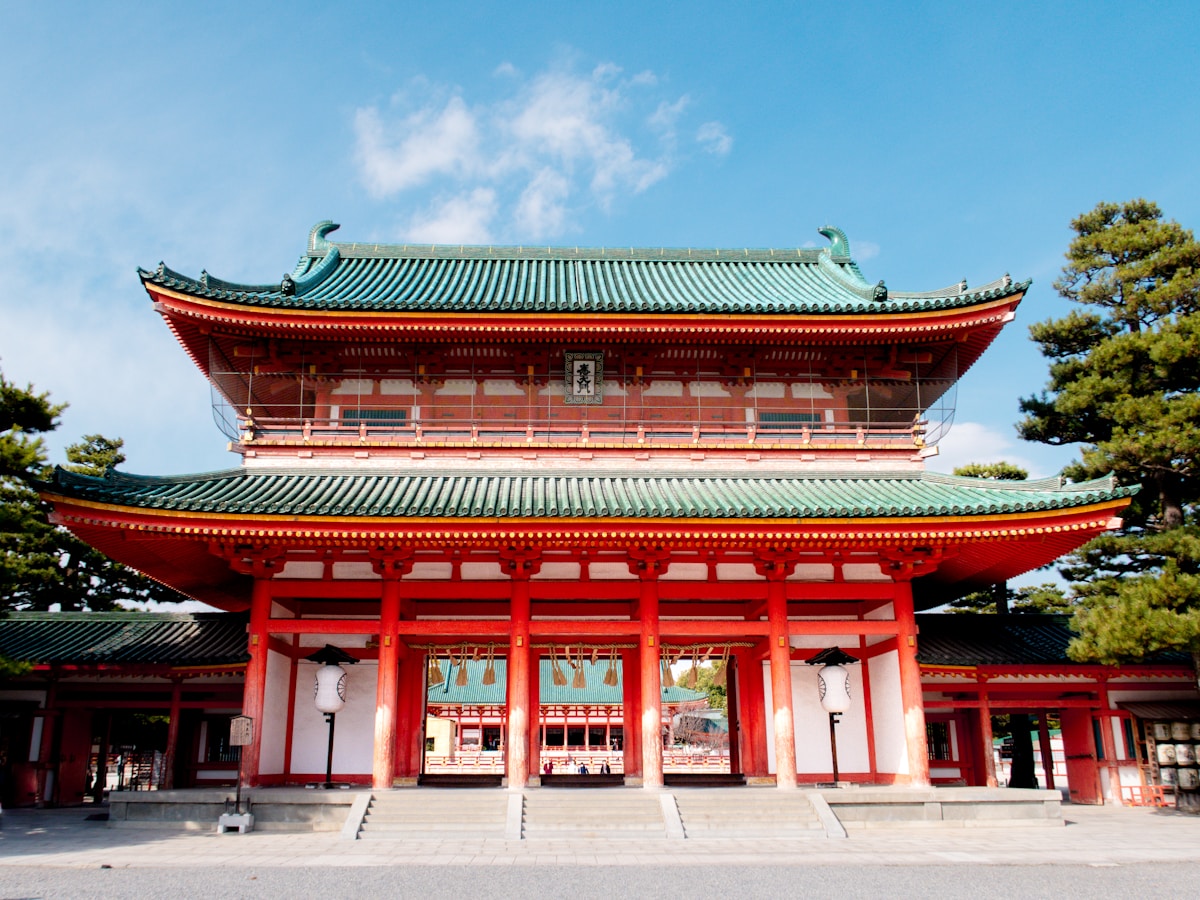
With its 24.2-meter torii gate and brilliant vermilion halls, Heian Shrine is Kyoto's boldest expression of Meiji-era co
 Temples & Shrines
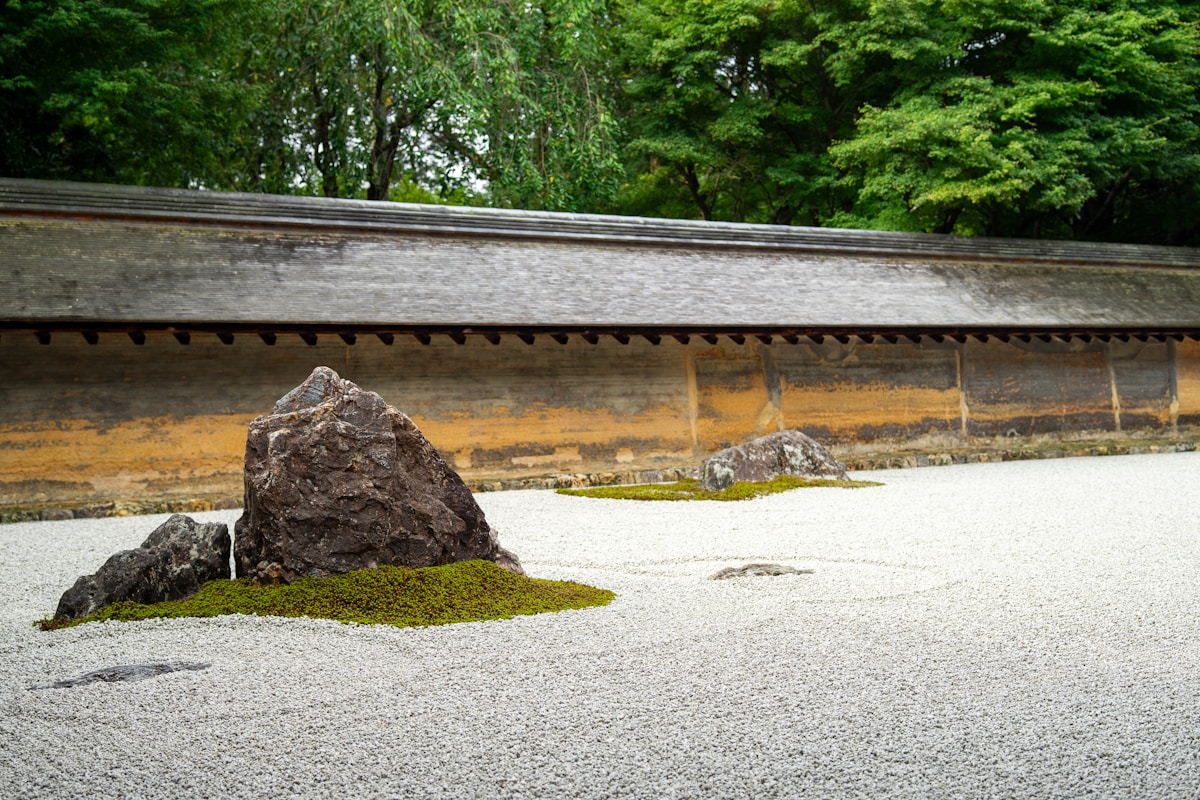
Daitoku-ji is a walled Zen monastery complex of 22 sub-temples, where Japan's greatest tea masters studied, Sen no Rikyu
 Neighborhood Guides
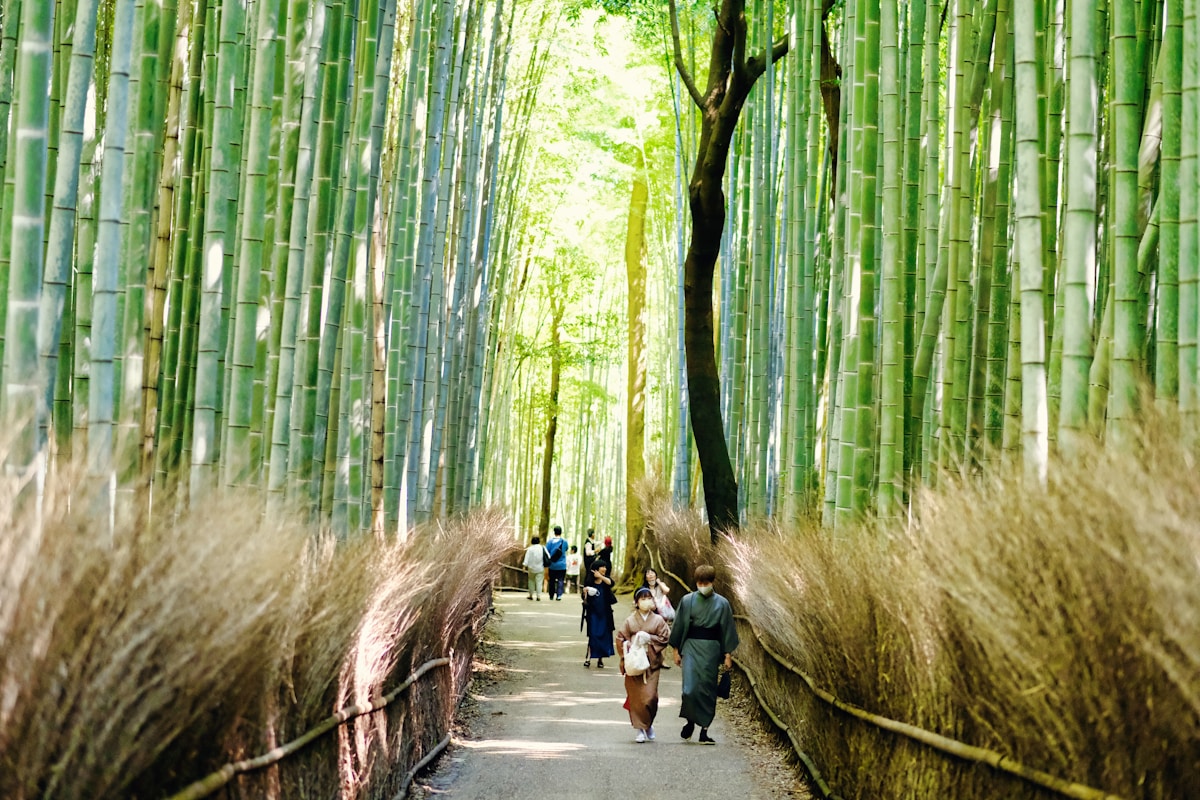
You've seen the photos — a narrow path slicing through towering green bamboo. Here's how to experience Arashiyama the wa