 Kimono & Style
Kanwa Kimono Kyoto: Complete Guide to Our Two Stores & Kimono Rental
Everything you need to know about Kanwa Kimono — two Kyoto stores, eight rental plans, prices, services, locations, and
Wearing kimono is the single most beautiful way to see Kyoto — and easier than you think. This guide covers kimono rental in Kyoto: the types of kimono, what each one costs, how the rental day works, and where to wear it for the best photos. Written by the team behind Kanwa Kyoto, with two kimono stores in the heart of Higashiyama.
Kyoto's old streets were built for kimono. The stone-paved slopes of Higashiyama, the teahouse lanes of Gion and the bamboo paths of Arashiyama were all designed around a slower, more elegant pace of walking — which is why the city is the world capital of kimono rental. Wearing one changes the whole feel of the day: you walk differently, notice details, and become part of the scenery rather than a spectator. And with the right plan, it is more affordable than most people expect.
Book the earliest slot you can (9:00 if possible). Dressing takes about 40 minutes, so an early start puts you in kimono by mid-morning — the best light, the emptiest streets, and the full day ahead of you. In peak seasons the morning slots fill days ahead; reserving online also lets us prepare your kimono before you arrive.
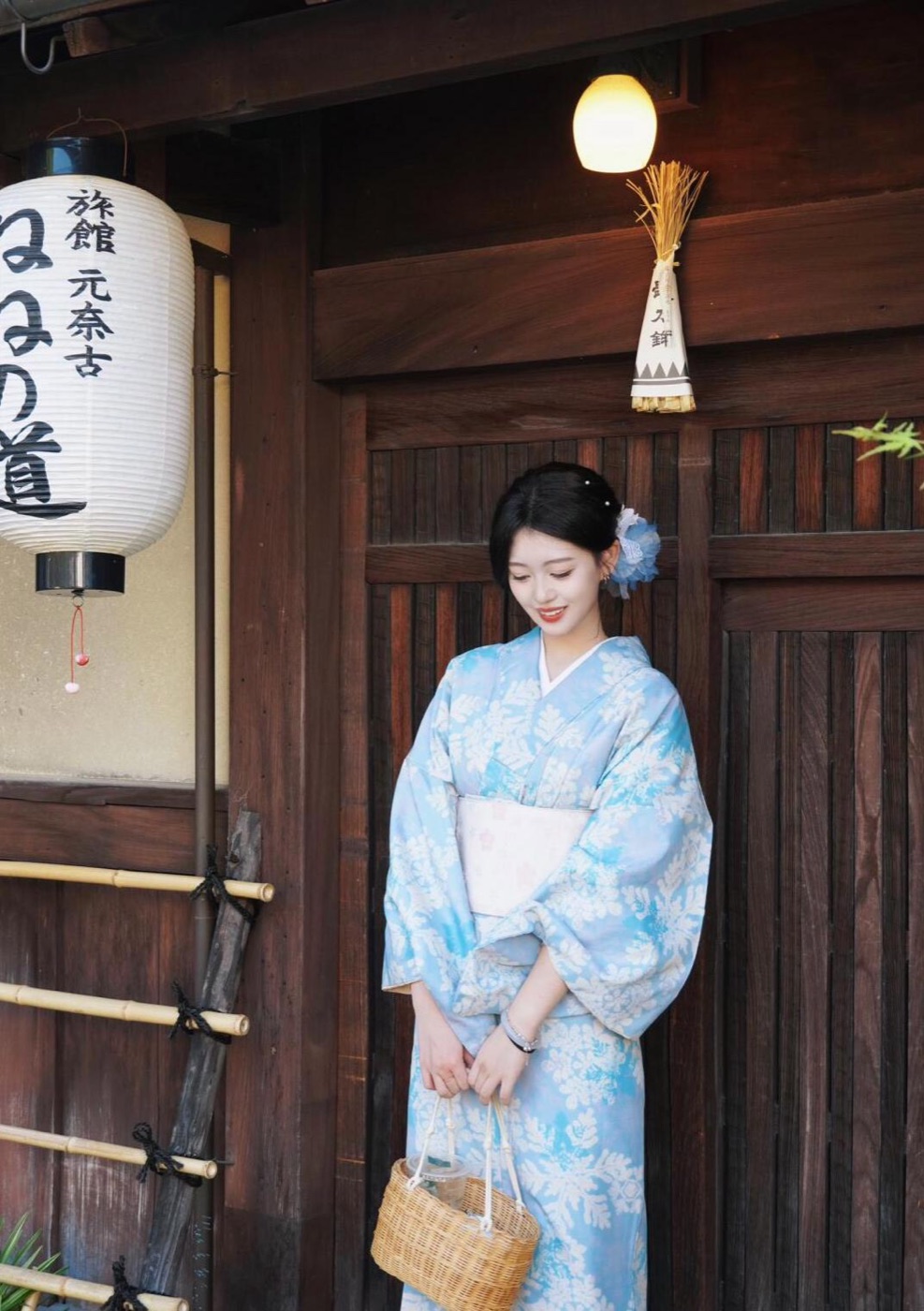
Komon — "small pattern" — is the everyday kimono: elegant, comfortable and the most popular choice for a first rental. The small repeating patterns are subtle up close and lovely in photos, and komon suits every season except deep summer. Kanwa's lace kimono is a more modern take — delicate lace fabric with the same classic silhouette, a favorite with couples and photography lovers.
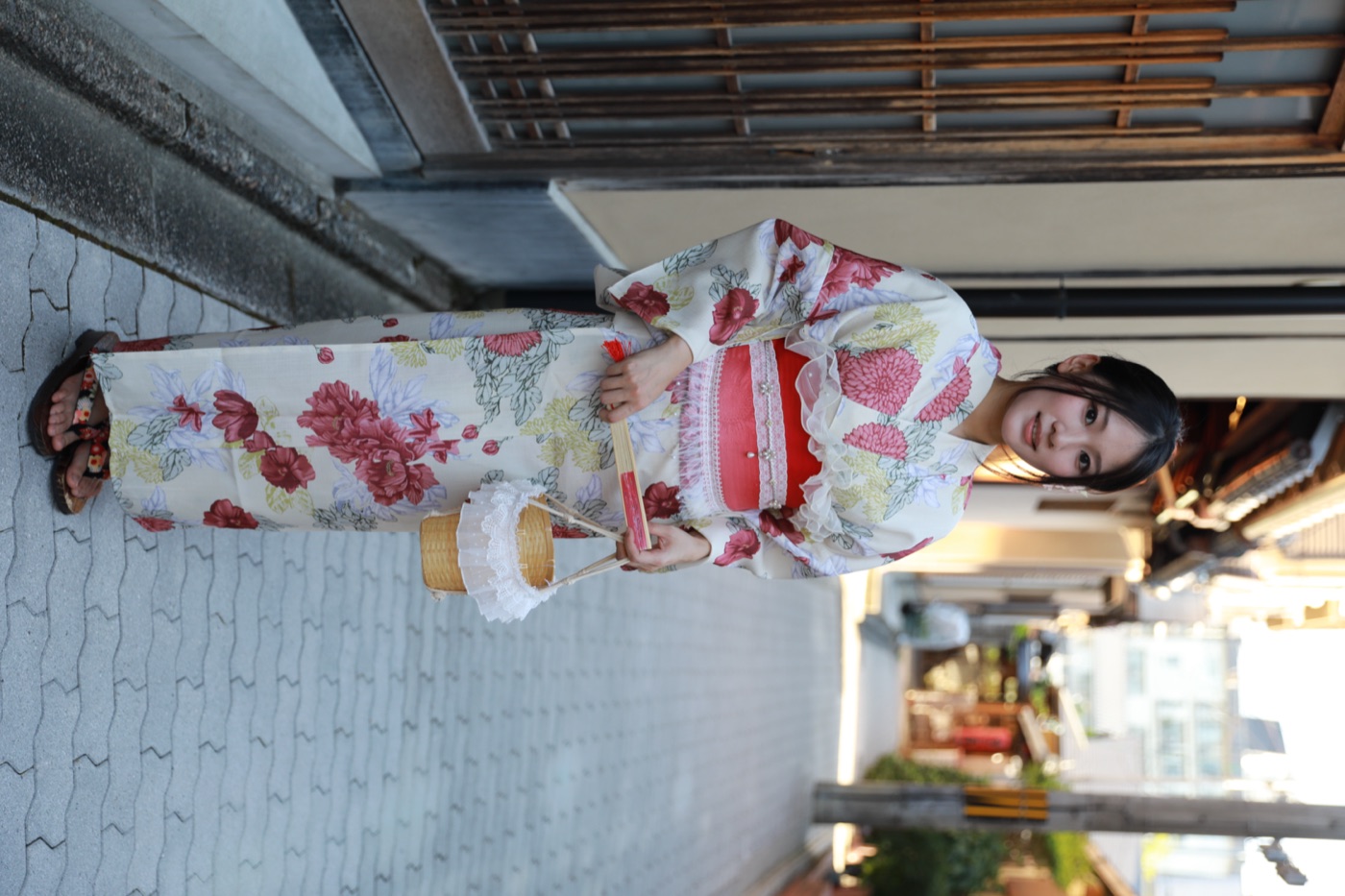
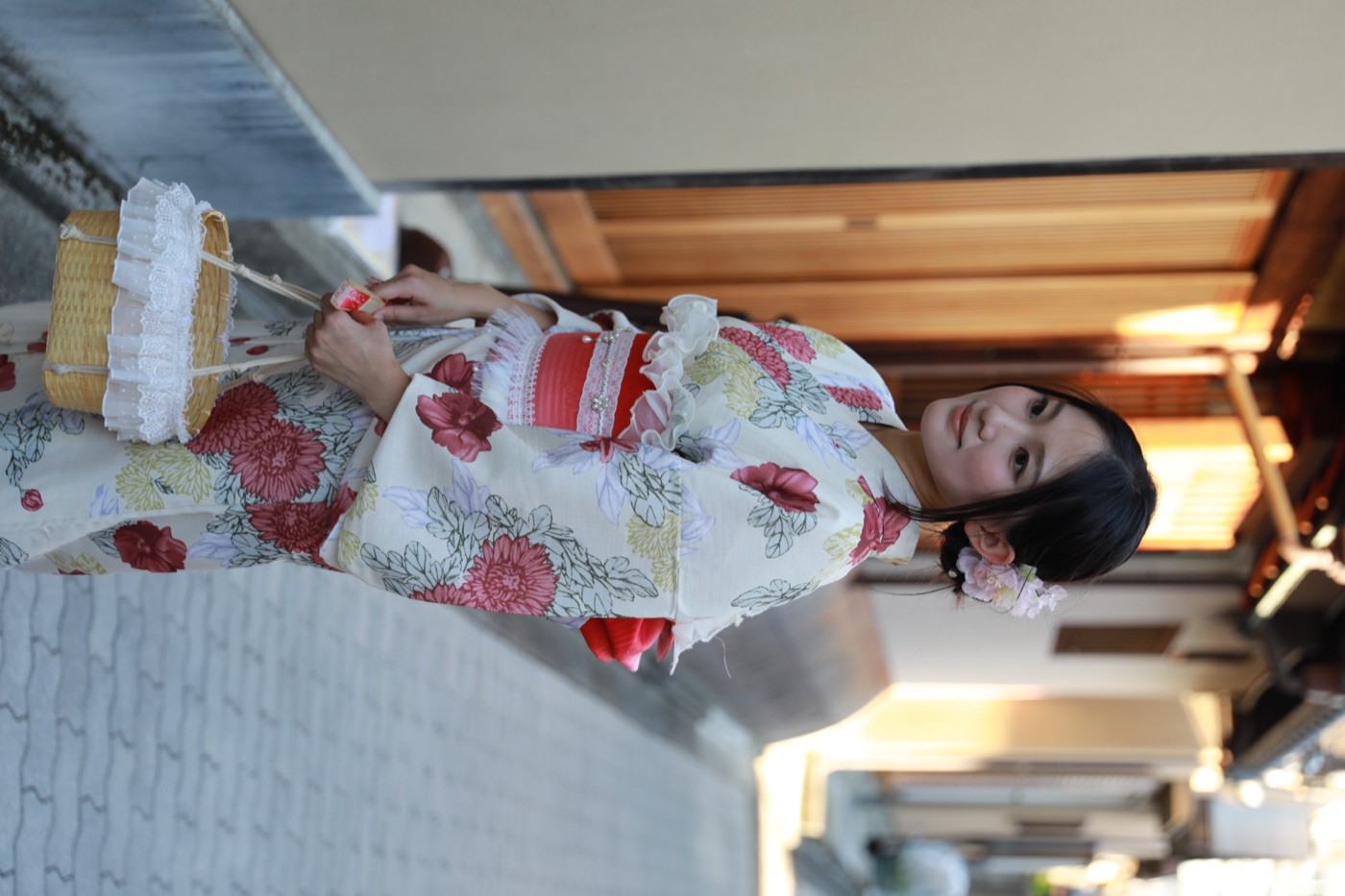
Yukata is the light cotton kimono worn in summer — the choice of Kyoto's festivals, riverside evenings and hot June-to-September days. It is simpler to wear, cooler, and looks perfect against the city's summer scenes: lantern alleys, kawadoko terraces, the Gion Festival. If you're visiting in warm weather, skip the heavier kimono and take yukata — you'll be glad you did by 3 PM.
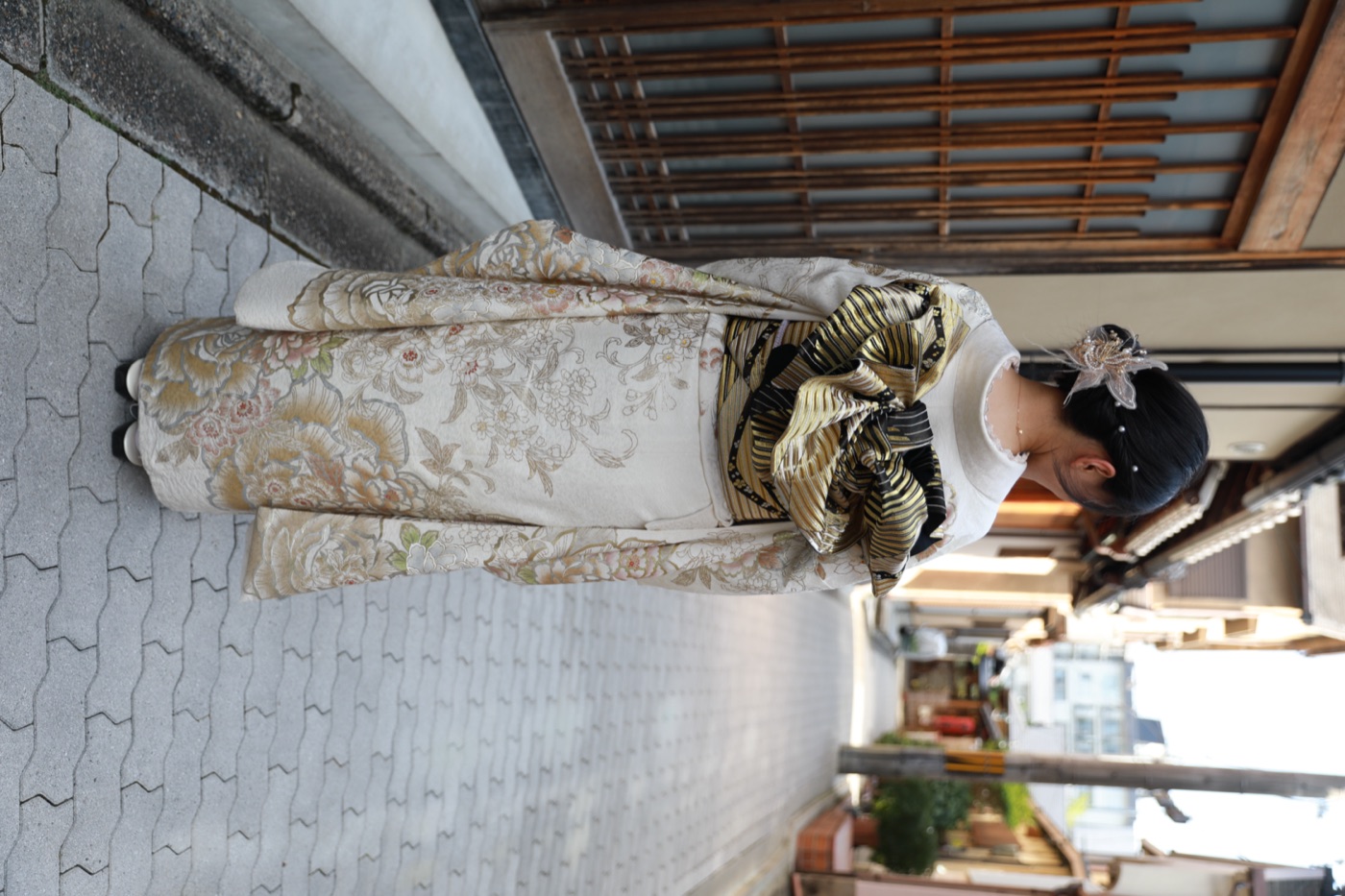
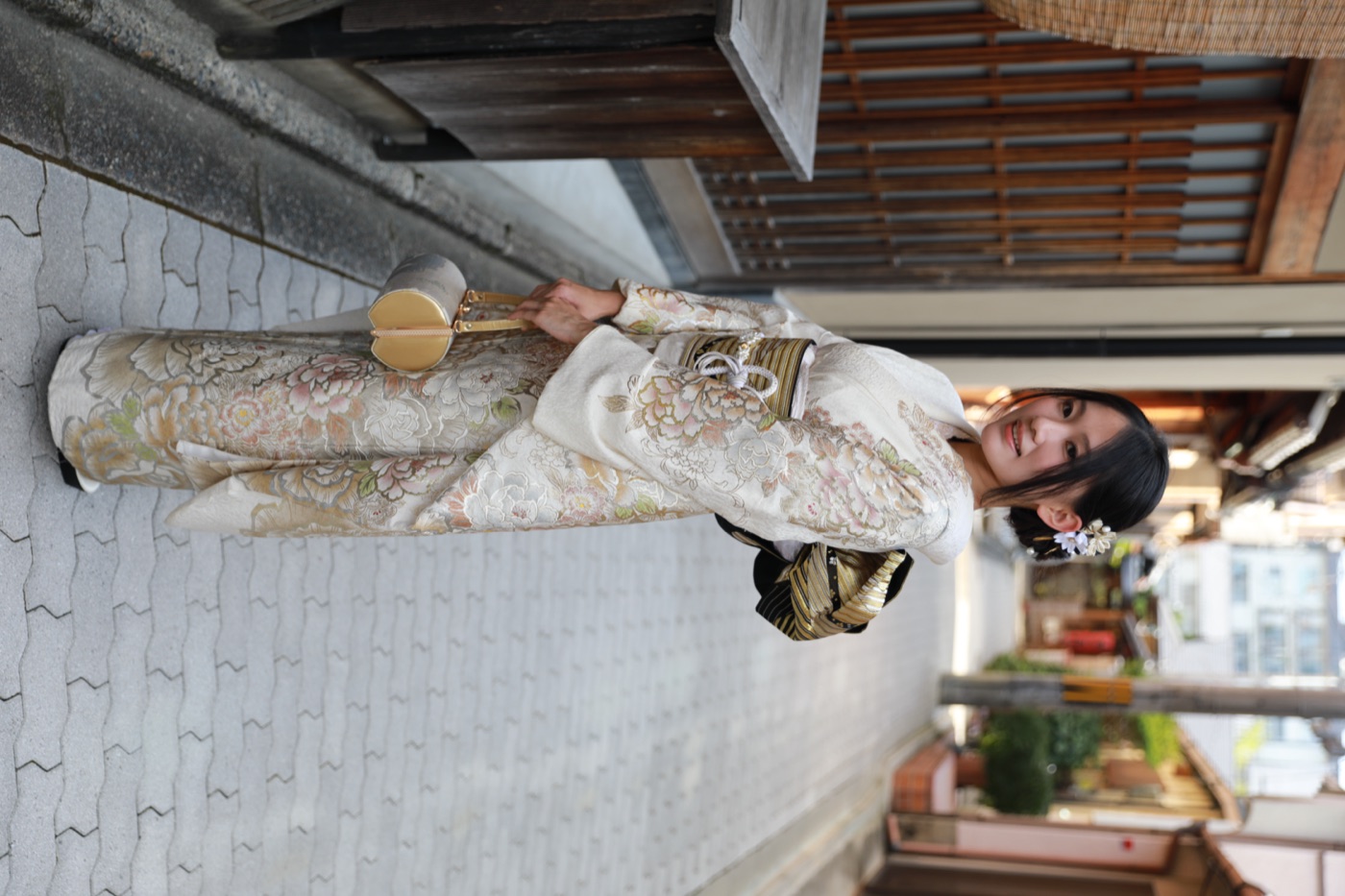
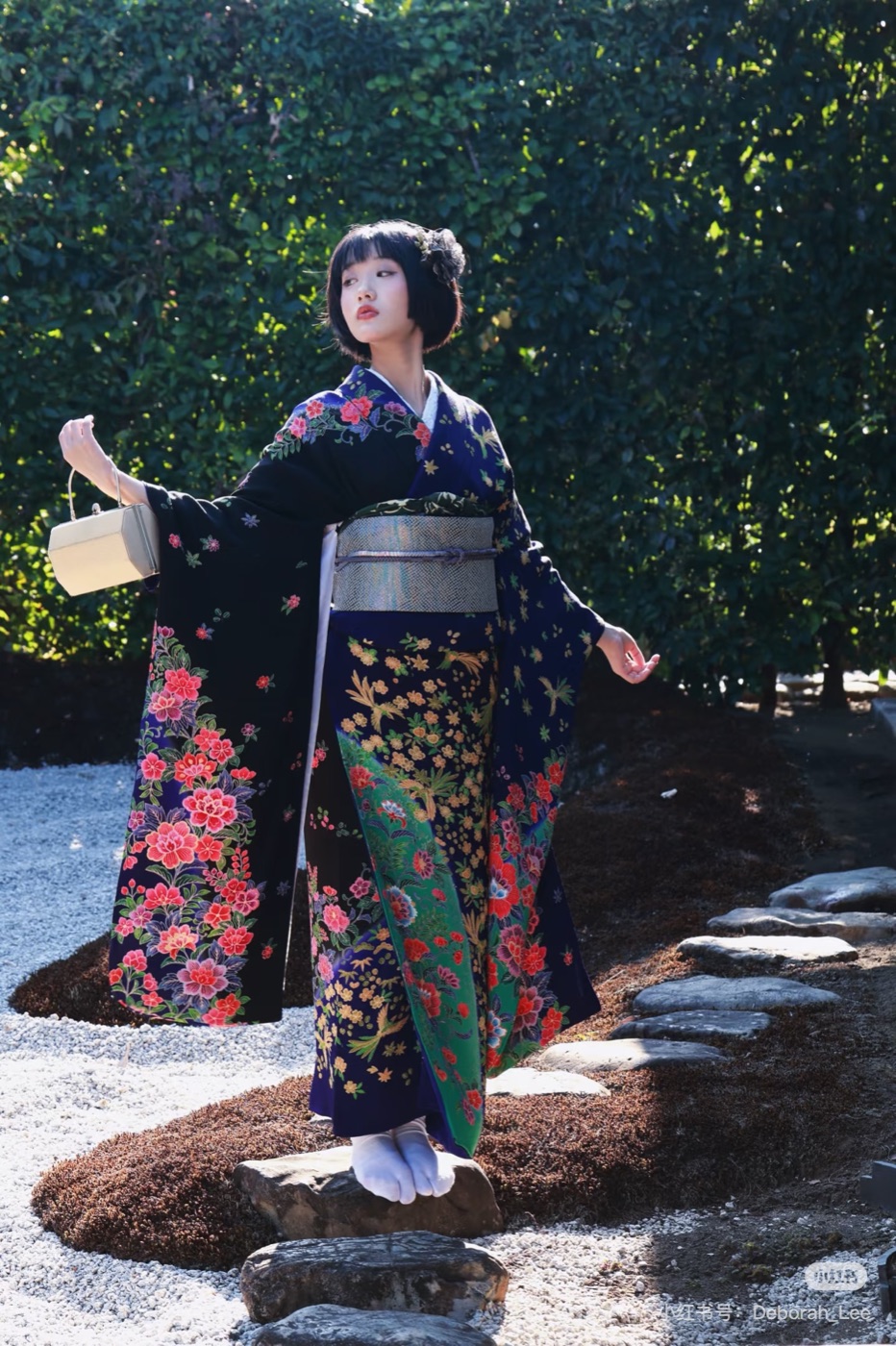
For a special day — an anniversary, a proposal, a formal dinner — the semi-formal houmongi ("visiting kimono") has elegant shoulder-to-hem patterns that photograph beautifully. Furisode, with its long swinging sleeves, is the most formal women's kimono: dazzling, traditionally worn for coming-of-age and weddings, and the single most photographed garment in our stores. It is the plan for a full-scale celebration in Kyoto.
| Plan | Price | Best for |
|---|---|---|
| Komon | ¥3,300 / ¥5,500 | First timers · couples · all-day exploring |
| Lace kimono | ¥6,800 | Modern look · photography |
| Yukata (summer) | ¥3,300 / ¥5,000 | June–September · festivals · kawadoko |
| Houmongi | ¥12,800 | Anniversaries · formal dinners |
| Furisode | ¥16,800 / ¥33,000 / ¥39,800 | Celebrations · the full-scale experience |
| Men's | ¥5,500 / ¥8,800 | Couples · group days out |
| Children's | ¥5,000 | Family days · photo keepsakes |
Every plan includes kimono, obi, shoes, hairstyling and hair accessories. No hidden charges.
Comfortable, classic, and the best value — the plan most of our first-time guests choose.
Light cotton for hot days; still completely authentic and gorgeous in summer photos.
Her komon, his men's kimono — matching styles, and couples often book the early slot for the empty streets.
Proposals, anniversaries, milestone trips — the furisode experience, hairstyling included.
Reserve online — the morning slots go first. Tell us the plan and store; we prepare your kimono before you arrive.
Yasaka/Gion store by Yasaka Shrine, or Kiyomizu store near Kiyomizu-dera. Leave your luggage free of charge.
Pick from 500+ kimonos, get dressed professionally, and choose your hairstyle — everything included.
Step straight into Higashiyama's slopes, Gion's lanes or the bamboo grove — hands-free, with your own shoes and bags looked after.
Back by 17:00 the same day, or keep the kimono overnight and return the next day — free of charge.
Short steps, easy pace. Wooden zori sandals come with the rental, and the stone-paved slopes are exactly what they were made for — the Higashiyama lanes were built for this gait. Take stairs slowly, in small steps, and you'll walk comfortably all day.
Yes, it's completely manageable — kimono are designed for it. The staff will walk you through it before you head out, and you can use the store's facilities before leaving. It feels natural after the first try.
Yes — guests eat lunch in kimono every day. Sit down gently, pull the collar slightly forward when eating, and tuck a napkin. A light meal like yudofu (tofu hot pot) is the classic kimono-day lunch.
Check the forecast before booking. In light rain, a compact umbrella does the job. For heavy rain, ask the store when booking — they can advise on the best plan, or suggest a dry day for the full experience.
Comfortably several kilometers at sightseeing pace. The Higashiyama loop (about 4 km) and the Gion lanes are ideal kimono distances — which is why our district guides recommend them for kimono days.
Free next-day return means you can stay out past dark — lantern-lit Ninenzaka, Yasaka Shrine at night, or a seasonal temple illumination — and bring the kimono back tomorrow instead.
Stone-paved slopes, Kiyomizu-dera and wooden townhouses — the classic kimono walk, and a 5-minute stroll from our Kiyomizu store.
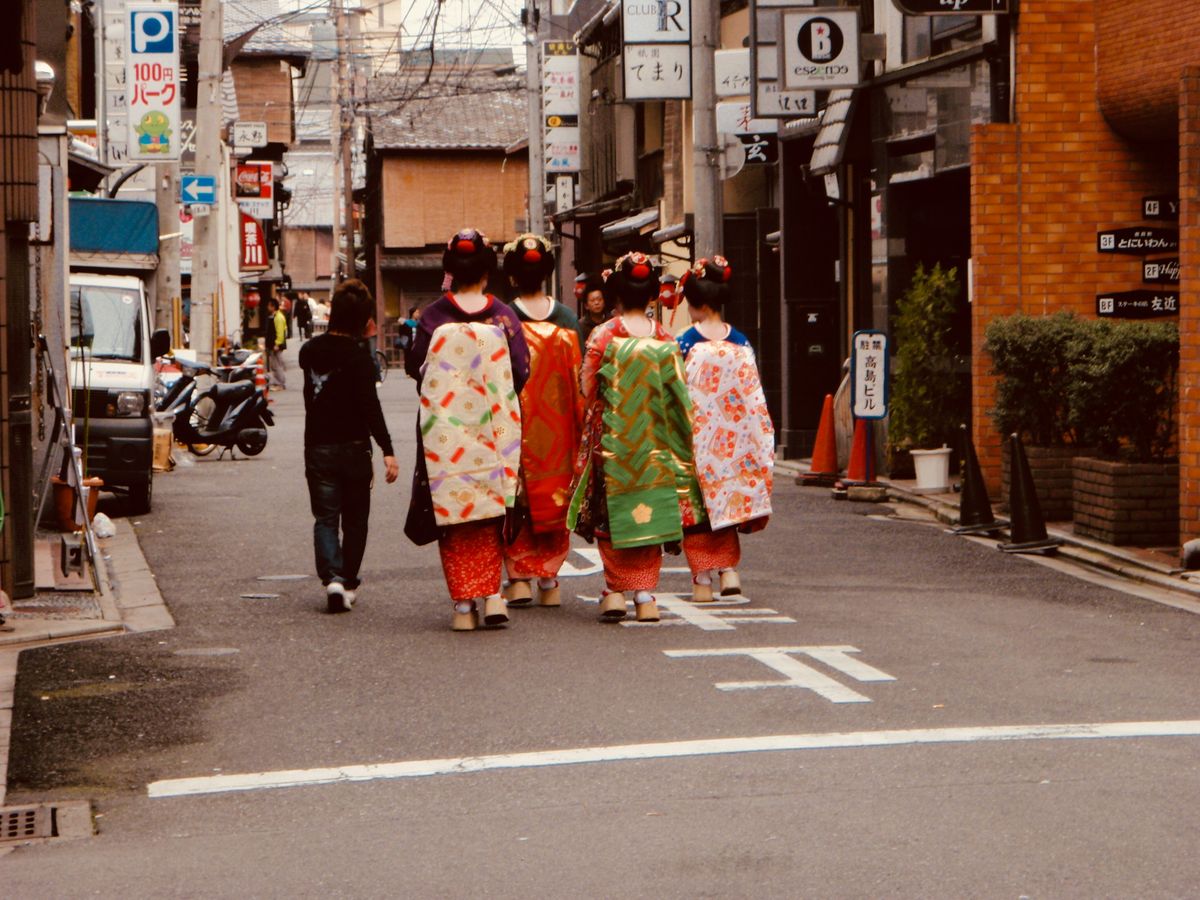
Full Higashiyama guide →Teahouse lanes and the geisha quarter — at 17:00–18:30 the evening light on Hanamikoji is the most photographed kimono scene in Kyoto.
Full Gion guide →The bamboo grove at 8:00, before the crowds — pale green light and towering stalks. About 40 minutes from the stores by train and bus.
Full Arashiyama guide →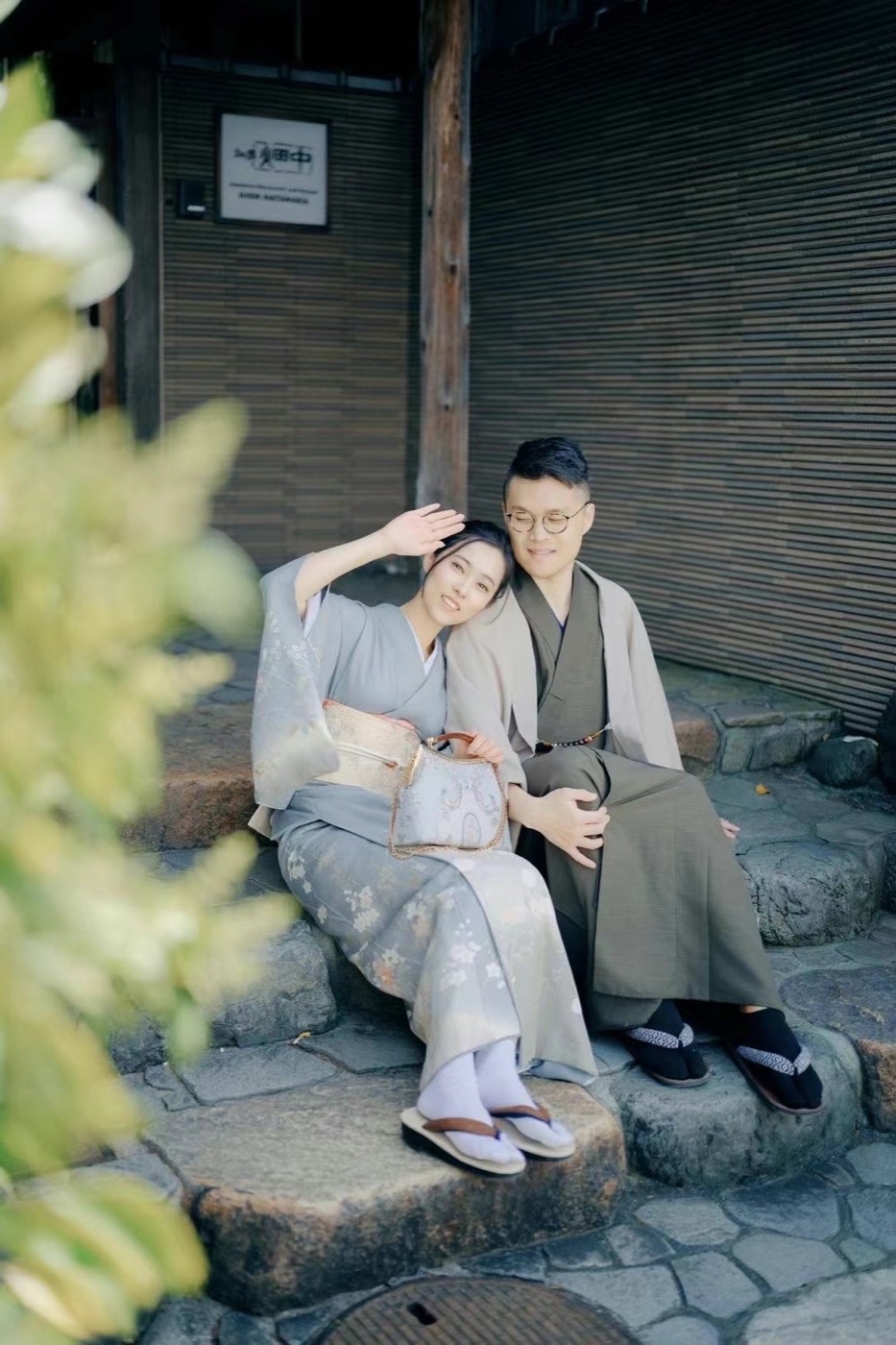
Dress at 9:00 → the Higashiyama loop in the morning → dusk among the lit cherry trees of Maruyama Park → Kiyomizu-dera's spring illumination (until about 21:00 in season) → free next-day return.
Higashiyama route →Morning on the Ninenzaka slopes → Kodaiji's garden and autumn illumination → Kiyomizu-dera after dark. Furisode against the red-and-gold light is the look of the season.
Kiyomizu-dera guide →Yukata through the Gion lanes by day, the Gion Festival evenings in July, and a kawadoko dinner by the river — Kyoto's most colorful kimono season.
Kawadoko dining guide →Kanwa Kyoto has two stores in the Higashiyama area — choose whichever fits your route. Both are open 9:00–17:00 daily, and our staff speak English, Chinese and Japanese.
• Is hairstyling included, or a separate fee? • Are shoes, obi and accessories included? • Is next-day return free? • What is the latest return time? • Do the staff speak your language? At Kanwa, the answer to all of the above is yes — the price on the plan is the price you pay, and our staff speak English, Chinese and Japanese.
At Kanwa Kyoto, kimono rental starts at ¥3,300: komono plans ¥3,300–¥5,500, lace kimono ¥6,800, yukata (summer) ¥3,300–¥5,000, houmongi ¥12,800, furisode ¥16,800–¥39,800, men's ¥5,500–¥8,800 and children's ¥5,000. Every plan includes hairstyling and accessories.
Yes — especially the early-morning slots, which fill first in peak season. Booking online in advance also lets Kanwa prepare your kimono ahead of time. Same-day walk-ins are possible when space allows, but availability is not guaranteed.
About 40 minutes for the full experience: choosing your kimono and obi, professional dressing, and hairstyling with hair accessories. Men's and children's dressing is faster.
Yes — next-day return is free at Kanwa Kyoto, so you can explore late or even wear the kimono over two days. Same-day return is by 17:00 (store closing).
Kanwa carries women's kimonos in a wide range of sizes, plus men's and children's plans. There are over 500 kimonos across the two stores. Accessories, obi and shoes are all included.
In summer (June–September), yukata — a light cotton kimono — is the comfortable choice, and Kanwa rents yukata from ¥3,300. In cooler months, regular kimono with a haori jacket works well, and the stores keep warm options for winter.
Nothing special — hairstyling and accessories are included, and you can leave your luggage at the store free of charge. Wear a top with thin or no collar (like a camisole) to keep the look clean.
Two stores in the Higashiyama area: the Yasaka/Gion store at 10-2 Tsukimicho, Higashiyama-ku (by Yasaka Shrine, 605-0829), and the Kiyomizu store at 4-chome Kiyomizu 190-2 (near Kiyomizu-dera, 605-0862). Both are open 9:00–17:00 daily, and staff speak English, Chinese and Japanese.
Yes — guests eat lunch in kimono every day. Sit down gently, pull the collar slightly forward when eating, and tuck a napkin. A light meal like yudofu is the classic kimono-day lunch.
Check the forecast before booking. In light rain, a compact umbrella does the job. For heavy rain, ask the store when booking — they can advise on the best plan, or suggest a dry day for the full experience.
Comfortably several kilometers at sightseeing pace. The Higashiyama loop (about 4 km) and the Gion lanes are ideal kimono distances, and zori sandals come with the rental.
Yes — free next-day return means you can keep the kimono after dark for lantern-lit lanes or seasonal temple illuminations such as Kiyomizu-dera in spring and autumn, and return it the next day.
Kimono & StyleEverything you need to know about Kanwa Kimono — two Kyoto stores, eight rental plans, prices, services, locations, and
 Kimono & Style
The best months for kimono in Kyoto, with monthly temperatures and what to wear each season.
 Kimono & Style
Plan a kimono day at Kiyomizu-dera: rental prices, top photo spots, crowd-free hours and a day itinerary.
 Kimono & Style
Master kimono photography in Kyoto with 10 iconic locations from Fushimi Inari to Arashiyama Bamboo Grove. Plus pro posi
 Kimono & Style
Kyoto summers are hot and humid, with temperatures often exceeding 35°C. Traditional kimono are made from silk, which is
 Kimono & Style
A practical guide to choosing between yukata and kimono for Kyoto's summer season, with rental tips, etiquette, and styl