 By Yuki Tanaka
Kyoto and kimono are a match made in photographic heaven. The city's thousand-year-old temples, bamboo groves, and lantern-lit alleys provide a backdrop that transforms a simple portrait into something timeless. But knowing where to shoot and how to pose makes the difference between an average vacation snap and a magazine-worthy image.
This guide covers: the 10 best kimono photo locations in Kyoto, pro-level posing tips, camera settings, and the etiquette you need to know before you start shooting.
1. The 10 Best Kimono Photo Locations in Kyoto
#1 Fushimi Inari — The Endless Torii Gates
Nothing says "Japan" like a tunnel of vermilion torii gates. Shoot from the side for depth (the gates recede into infinity), or frame the person in the center for a dramatic vanishing-point composition. Pro tip: Go early (before 7:30 AM) or walk 20+ minutes up the mountain — the crowds thin dramatically.
#2 Yasaka Shrine — Lanterns & Vermilion
The white paper lanterns of the Dance Stage create a soft, diffused glow that's incredibly flattering. Stand beneath them and look slightly up — the lanterns frame the shot naturally.
#3 Higashiyama Streets (Ninenzaka & Sannenzaka)
Cobblestone slopes, wooden machiya townhouses, and the Yasaka Pagoda in the distance. Walk slowly down the slope, looking slightly away from the camera — the candid "strolling" look works best here.
#4 Arashiyama Bamboo Grove
Towering green bamboo creates a vertical frame. Look up into the bamboo, with kimono sleeves gently catching the filtered light. Early morning (before 7 AM) is essential for crowd-free shots.
#5 Kinkakuji Golden Pavilion
The gold reflection in the mirror pond makes a stunning backdrop. Stand at the classic viewpoint, then turn slightly so the pavilion is behind your shoulder. The contrast between gold architecture and colorful kimono fabric is striking.
#6 Gion Hanamikoji
Old Kyoto atmosphere at its finest. Wooden teahouses, noren curtains, and stone-paved alleys. Evening (around 17:00-18:00) when paper lanterns begin to glow is the golden hour here.
#7 Kiyomizu-dera Wooden Stage
The panoramic city view from the famous stage is iconic. Stand at the railing looking out over the treetops — the kimono sleeve and the Kyoto skyline in one frame.
#8 Nanzenji Aqueduct
A surprising blend of Roman-style brick aqueduct and Zen temple. The red brick against a colorful kimono creates unique contrast you won't find elsewhere in Kyoto.
#9 Philosopher's Path
Canal-side path lined with cherry trees. In spring the pink blossoms frame the shot. In summer, the green canopy creates a natural tunnel. Walk along the canal with a paper parasol for the classic "Kyoto stroll" shot.
#10 Maruyama Park
Kyoto's oldest park, directly behind Yasaka Shrine. The weeping cherry tree (shidare-zakura) is the star in spring, but even in summer, the ponds, bridges, and cedar groves offer endless composition options.
| Location | Best Time | Style | Crowd Level |
|---|---|---|---|
| Fushimi Inari | Before 7:30 AM | Dramatic, depth | High (lower) → Low (upper mountain) |
| Yasaka Shrine | Dusk (lanterns on) | Soft, romantic | Medium |
| Higashiyama Streets | 6:00-7:30 AM | Candid, travel-style | High |
| Arashiyama Bamboo | Before 7 AM | Vertical, serene | Very High |
| Gion Hanamikoji | 17:00-18:00 | Atmospheric, moody | Medium |
2. Posing Tips for Kimono Photos
The Profile Turn
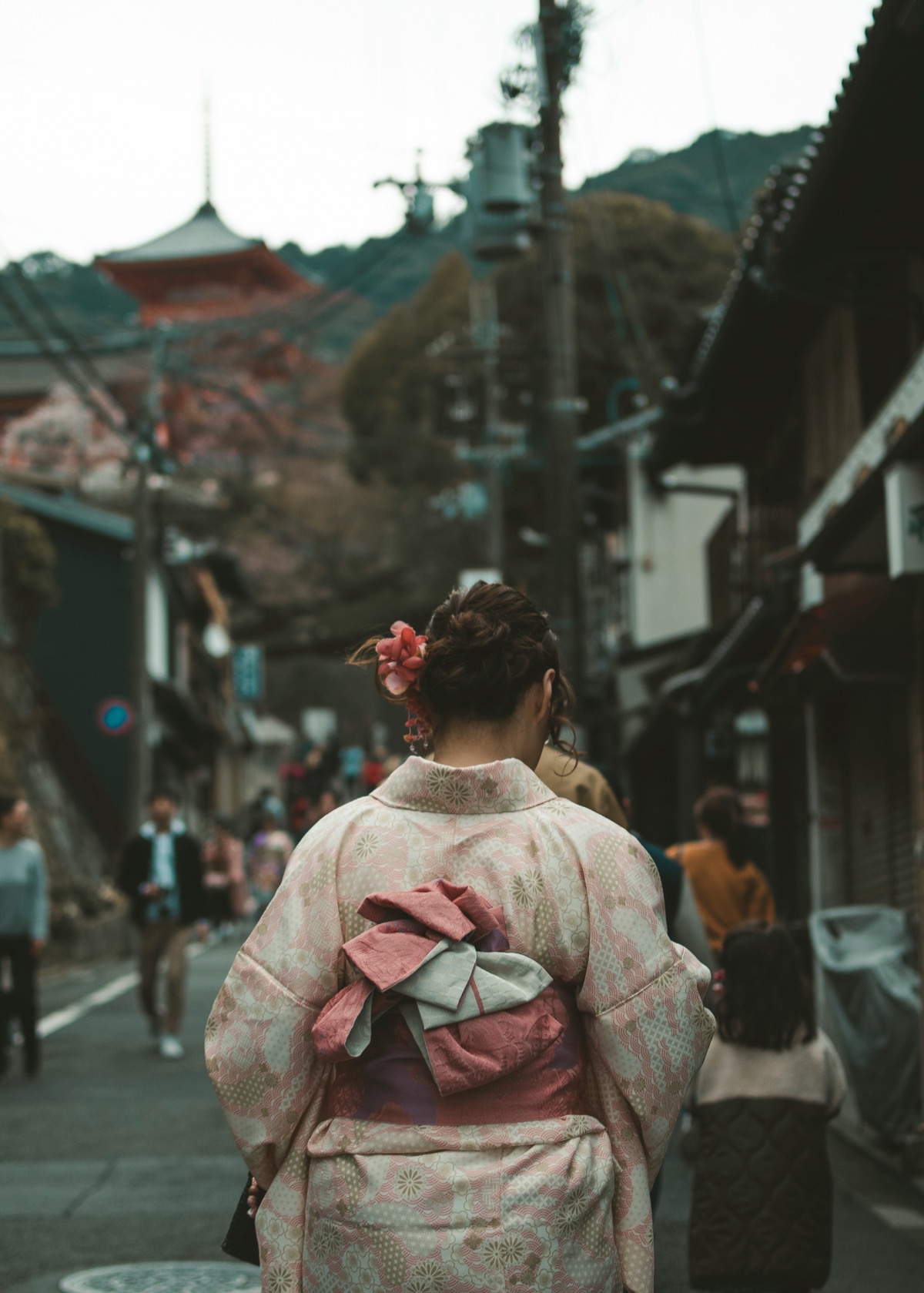
Kimono are designed to look beautiful from the back (the obi knot is the centerpiece). Always take a few shots from behind — looking over your shoulder, or walking away with the obi clearly visible.
The Sleeve Sway
The long kimono sleeves (furisode or the slightly shorter ones on regular kimono) catch movement beautifully. Gently lift one arm so the sleeve drapes, or spin slowly for a flowing effect.
The Doorway Frame
Stand in temple or teahouse doorways. The dark interior behind you contrasts with your bright kimono, creating a natural framed portrait.
The Parasol
A paper wagasa (和傘) parasol is the ultimate kimono photography prop. Hold it slightly tilted over your shoulder — it adds height, color, and a traditional accent that completes the composition.
3. Camera Settings & Gear Tips
| Scenario | Recommended Settings | Lens |
|---|---|---|
| Portrait in temples | f/2.8-4, bokeh background | 50mm or 85mm prime |
| Torii gate tunnel | f/5.6-8, deep depth of field | Wide angle 24-35mm |
| Golden hour lanterns | f/2.8, ISO 800-1600 | 50mm prime, steady hand |
| Phone photography | Portrait mode, 2x zoom | Any modern smartphone |
4. Kimono Photography Etiquette
Tripods are banned at most temples and shrines. Use a monopod if you need stability, or rely on image stabilization.
No blocking paths. Higashiyama streets are narrow and crowded. Take your shot quickly and step aside. The best photos come when you're respectful of the space.
Don't photograph geisha/maiko without permission. If you see a maiko in Gion, admire from a respectful distance. Chasing them for photos is considered extremely rude.
Flash is usually frowned upon inside temples and shrines. Natural light produces more atmospheric results anyway.
Get the Perfect Kimono for Your Photoshoot
200+ kimono styles | Professional dressing (15 min) | Hair styling available
Book Your Kimono5. FAQ
Q: What time of day is best for kimono photos?
A: Golden hour — roughly 5:30-7:00 AM and 4:30-6:30 PM in summer. Morning is better for popular spots (fewer crowds), evening for atmospheric lantern shots.
Q: Can I use my phone for good kimono photos?
A: Absolutely. Modern smartphones in portrait mode at 2x zoom produce excellent results. Focus on composition and lighting rather than gear.
Q: Is it okay to take photos inside temples?
A: It varies. Most temples allow photography in outdoor areas but prohibit it inside main halls. Always check for signs. Flash is almost never allowed.
Q: How long does kimono rental last for a photoshoot?
A: Standard rental is until 17:00-17:30. Kanwa offers free overnight return, so you can keep the kimono through sunset for golden-hour shots.
Q: What color kimono photographs best?
A: Against Kyoto's vermilion and brown backdrops, cool colors (blue, purple, teal) pop beautifully. Against bamboo and greenery, red, pink, or orange kimono create striking contrast.