 By Yuki Tanaka
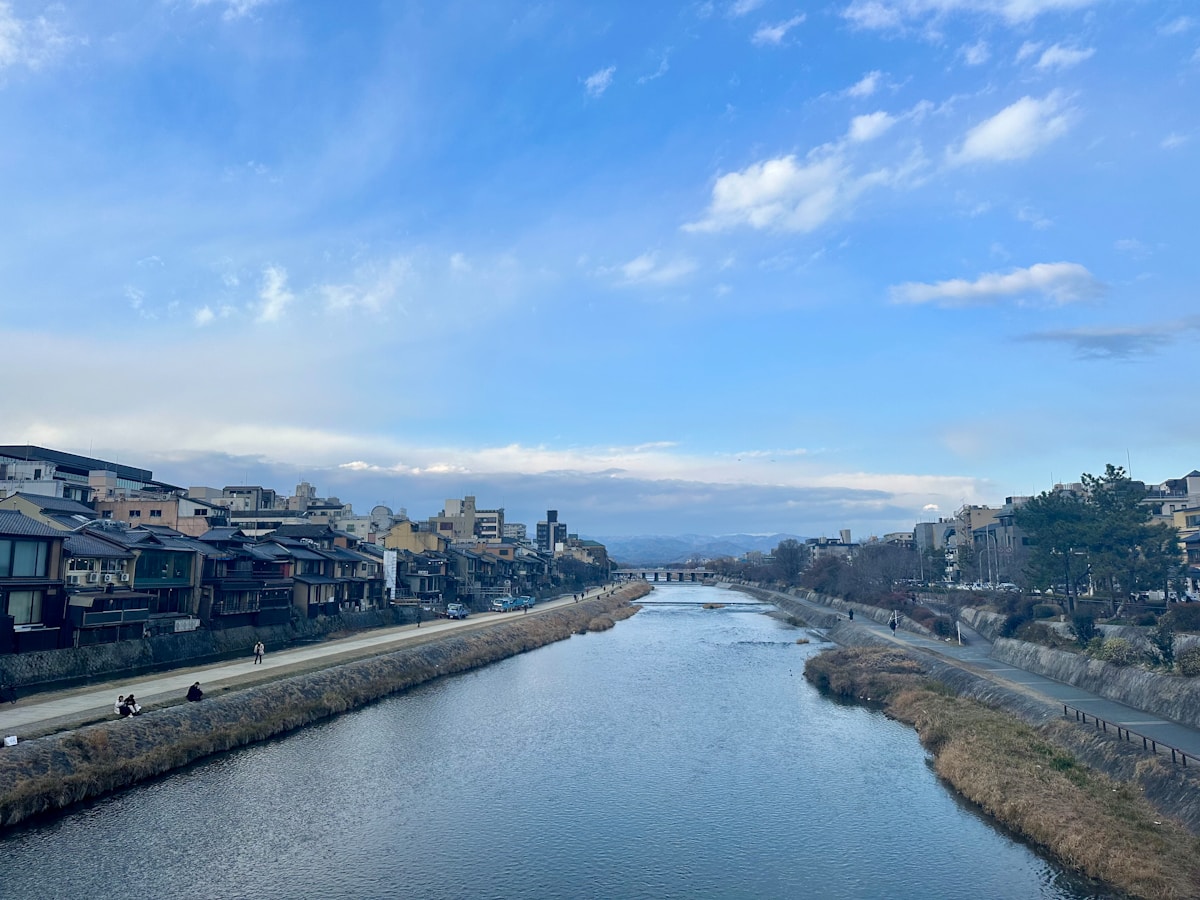
The Kamo River (鴨川, Kamo-gawa) is Kyoto’s living room. On any warm evening, the sloping banks between Sanjo and Shijo fill with students, couples, and musicians — people sitting on the grass, feet over the water, watching the sun drop behind the western hills. It’s free, it’s central, and it’s the closest thing the city has to a public square.
The river runs 31 kilometers from the mountains of the north down through the heart of Kyoto. When Emperor Kanmu founded the city here in 794, the river — and its sister, the Takase — shaped the whole grid of the capital. Today it’s the city’s favorite walking route, its best free sunset spot, and the backdrop for some of the most relaxed photos you’ll take in Japan.

How to Get to the Kamo River
The river runs through the center of Kyoto, so access is easy from almost anywhere:
- Demachiyanagi (north): Keihan Line or Eizan Line station, 2 minutes from the river delta — the classic starting point.
- Sanjo & Shijo (center): Keihan Line Sanjo/Shijo stations put you right on the banks; Hankyu Kawaramachi is a 5-minute walk west.
- Kyoto Station: City buses #4, #17, #205 run to Shijo-Kawaramachi in about 20 minutes.
- From Gion: Cross the river from Gion’s Hanamikoji street and you’re on the east bank in five minutes — the perfect end to a Higashiyama walk.
The Best Sections of the River, North to South
1. The Delta at Demachiyanagi — the Turtle Stones
Where the Kamo and Takano rivers meet, stepping stones shaped like turtles let you cross the shallow water. Jumping between the turtles is a Kyoto rite of passage — kids love it, and so does everyone with a camera. The delta is also the gateway to Shimogamo Shrine (a 10-minute walk through the forest path) and the northern end of the Philosopher’s Path is a short bus ride east.
2. Sanjo to Shijo — the Heart of the River
This is the classic stretch: wide grassy banks, stone steps down to the water, and the noryo-yuka — the wooden platforms where riverside restaurants serve dinner over the water from May to September. In summer the platforms glow with lanterns; in autumn the maples on the banks turn red.
3. Pontocho & Kiyamachi — the Lantern Alley Banks
On the western bank, the narrow alleys of Pontocho and Kiyamachi run parallel to the river, packed with restaurants and bars. The river path itself is quieter — walk it at dusk for lantern reflections on the water.

Best Time to Visit the Kamo River
- Golden hour (17:00–19:00, year-round): the light on the water and the western hills is the river’s best moment. In summer it stays light until 19:30.
- Evening (May–September): the noryo-yuka platforms open and the banks fill with people — the liveliest time of the year.
- Cherry blossom season (late March–early April): the stretch between Sanjo and Shijo and the Takase canal are lined with blossoms.
- Early morning: mist over the water, almost no one around — best for a peaceful walk or a quiet run.
Best Photo Spots & a River Photo Walk
- The turtle stones at Demachiyanagi — the classic jumping-shot. Go early or late to avoid the queue of tourists doing the same thing.
- The stone steps near Shijo bridge — sit facing the water for a casual, natural portrait with the hills behind.
- The noryo-yuka platforms from the east bank — shoot across the water toward the wooden decks and lanterns; summer evenings give the best atmosphere.
- Pontocho’s alley mouth — one step back from the river, the lantern-lit alley is a classic night shot.
- The sandbar under Shijo bridge — herons, egrets, and shallows; a good low-angle shot with the bridge framing the river.
The whole walk from Demachiyanagi to Shijo is about 40 minutes at a slow photo pace — flat, paved, and easy in any footwear, which makes it a perfect end-of-day leg after a day in kimono around Gion.
What to Wear for a River Walk
The riverbanks are casual, but if you want photos that feel like Kyoto rather than a city park, a yukata in summer or a light kimono in other seasons photographs beautifully against the water and the old alleys. The contrast between formal Japanese dress and the everyday river life is exactly the kind of image that stands out.
If you’re renting kimono for a Gion day, plan the river as the final stop — the walk from Hanamikoji to the river is five minutes, and the evening light on the water gives you the best shots of the day. A Gion kimono rental keeps the whole route on foot: dress in Gion, walk the alleys, cross to the river, and return the kimono before closing. In summer, ask about yukata plans — they’re lighter, cooler, and made for exactly this kind of evening.
Kamo River Combined Route (Half Day to Full Day)
- The classic river loop: Shimogamo Shrine → delta turtle stones → walk south along the east bank → Gion & Yasaka Shrine → back across the river to Pontocho for dinner. Full day, zero buses.
- The short evening version: Gion at 16:00 → cross to the river → walk the banks at golden hour → Pontocho dinner. Half evening, ideal for a kimono day.
- The north version: Demachiyanagi delta → Shimogamo Shrine → bus east to Ginkaku-ji & the Philosopher’s Path. A full, quiet day away from the crowds.
FAQ
Is the Kamo River walk free?
Yes — the entire riverbank is public and free to walk, sit, or picnic on. The only costs are the restaurants on the noryo-yuka platforms in summer.
Can you swim in the Kamo River?
Officially no, and it’s not recommended — the water is shallow in places but can deepen quickly. Wading at the delta is common (kids do it all summer), but keep it to ankle depth.
When do the noryo-yuka platforms open?
Traditionally from May 1 to September 30, though some restaurants extend into October. Dinner on a platform requires a reservation and typically costs more than the same restaurant’s indoor seating.
Is the river nice in winter?
Yes, in a different way — the bare trees and clear winter light are beautiful, and the banks are nearly empty. Herons and ducks are easier to spot. Just dress warm: the river is a wind channel.
Can I do a kimono photoshoot at the Kamo River?
Very easily — it’s public, free, and has natural backdrops at every step. The golden-hour light by the river is some of the best in Kyoto for portraits. Rent in Gion so the river is your final walk before returning the kimono.
Ending a Gion day by the river? Kanwa Kimono’s Gion/Yasaka shop is a five-minute walk from Hanamikoji — dress in the morning, walk the alleys and riverbanks, and return the kimono by 17:00. Plans from ¥3,300.