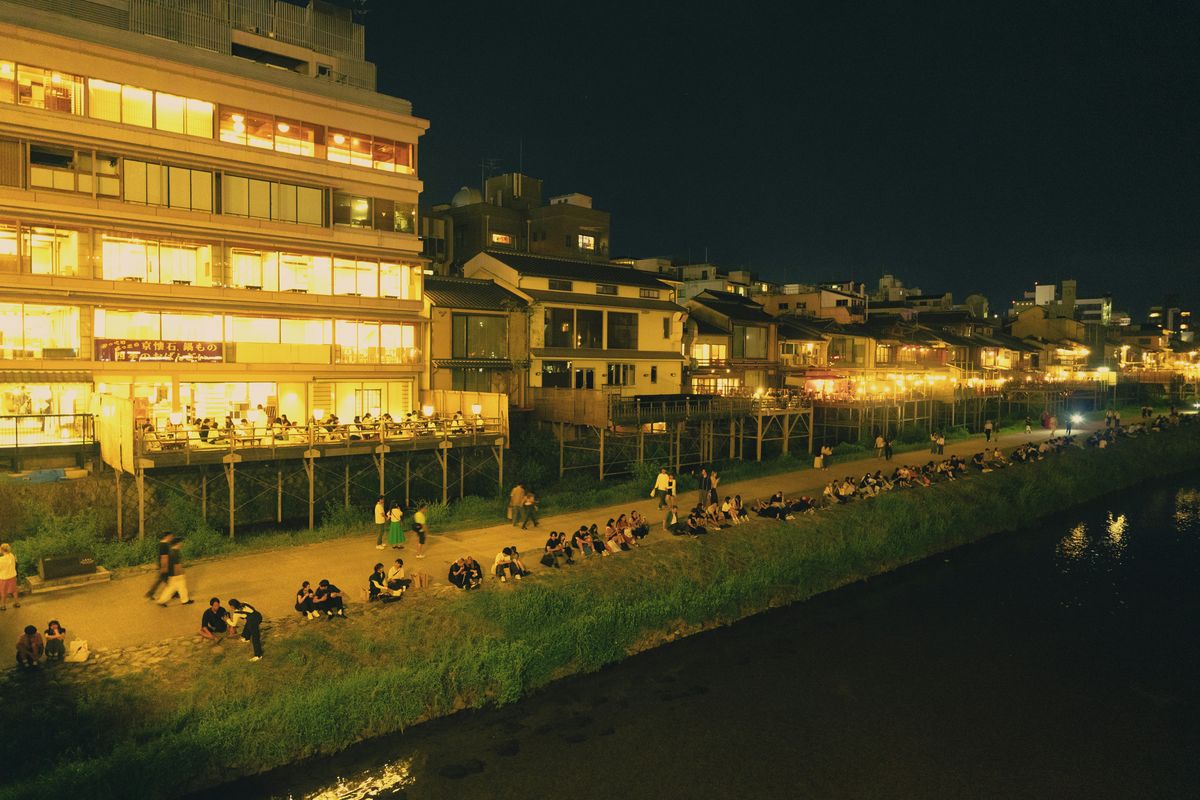
Kawadoko (川床, literally "river floor") is a uniquely Kyoto dining tradition where restaurants build wooden platforms over or alongside rivers, allowing diners to enjoy their meals while feeling the cool breeze and hearing the gentle flow of water beneath them.
This tradition dates back to the Momoyama Period (1583–1600) and is practiced in three main areas of Kyoto: the Kamogawa River in the city center, the Kibune River in the mountains, and the Uji River in the south. Each offers a different atmosphere — from urban sophistication to mountain tranquility.
Kamogawa River Kawadoko: The Classic
The most famous kawadoko is along the Kamogawa River in downtown Kyoto, between Nijō-dōri and Gojō Ōhashi Bridge. Here, over 100 restaurants construct elaborate wooden platforms (called noryō yuka or kawayuka) each year from May to September.
- Atmosphere: Urban, lively, with views of the city skyline and Pontocho lanterns
- Cuisine: Kyoto kaiseki, obanzai (home-style Kyoto dishes), sushi, and creative fusion
- Best for: First-time visitors, romantic dinners, groups
- Price range: ¥8,000–30,000 per person (kaiseki), ¥3,000–8,000 (casual dining)
Kibune River Kawadoko: Mountain Magic
For a completely different experience, head to Kibune in the mountains north of Kyoto. Here, restaurants build platforms directly over the crystal-clear Kibune River, surrounded by forest. The water is so close you can almost dip your toes in.
- Atmosphere: Serene, forested, deeply connected to nature
- Cuisine: Kawadoka-style kaiseki featuring river fish (ayu), seasonal vegetables, and wild mountain herbs
- Best for: Nature lovers, couples, special celebrations
- Price range: ¥8,000–25,000 per person
What to Eat at Kawadoko
| Dish | Description | Season |
|---|---|---|
| Hamo (pike conger) | Kyoto's signature summer fish, prepared as tempura, shabu-shabu, or grilled | Jun–Aug |
| Ayu (sweetfish) | Grilled whole river fish, a symbol of summer in Japan | Jun–Sep |
| Hamokusu (hamo balls) | Minced hamo formed into dumplings, served in soup or dashi | Jun–Aug |
| Hiyayakko | Cold silken tofu with ginger, scallions, and soy sauce | May–Sep |
| Nasu dengaku | Miso-glazed grilled eggplant, a Kyoto summer staple | Jun–Sep |
| Kakigori | Shaved ice with Uji matcha, azuki, or fruit syrup | Jul–Aug |
Practical Information
| Item | Kamogawa | Kibune |
|---|---|---|
| Season | May 1 – September 30 | May 1 – September 30 |
| Reservations | Essential for kaiseki; walk-in possible for casual | Always required; very limited seats |
| Access | Walk from Shijō-Kawaramachi or Sanjō Station | Eizan Railway to Kibune-guchi + 30-min walk |
| Best Time | Evening (18:00–20:00) for lanterns and city lights | Lunch or early evening for cooler mountain air |
FAQ
Q: What happens if it rains?
A: Most restaurants have covered indoor seating as backup. Some Kawadoko platforms have partial roofs, but heavy rain usually means dining indoors.
Q: Is kawadoko suitable for families with children?
A: Kamogawa is more family-friendly than Kibune. Kibune's platforms are directly over the water and may not be suitable for young children. Many restaurants offer children's portions.
Q: Can I experience kawadoko on a budget?
A: Yes! Some Kamogawa restaurants offer lunch kawadoko sets for ¥3,000–5,000. There are also beer gardens and casual dining options for under ¥5,000.