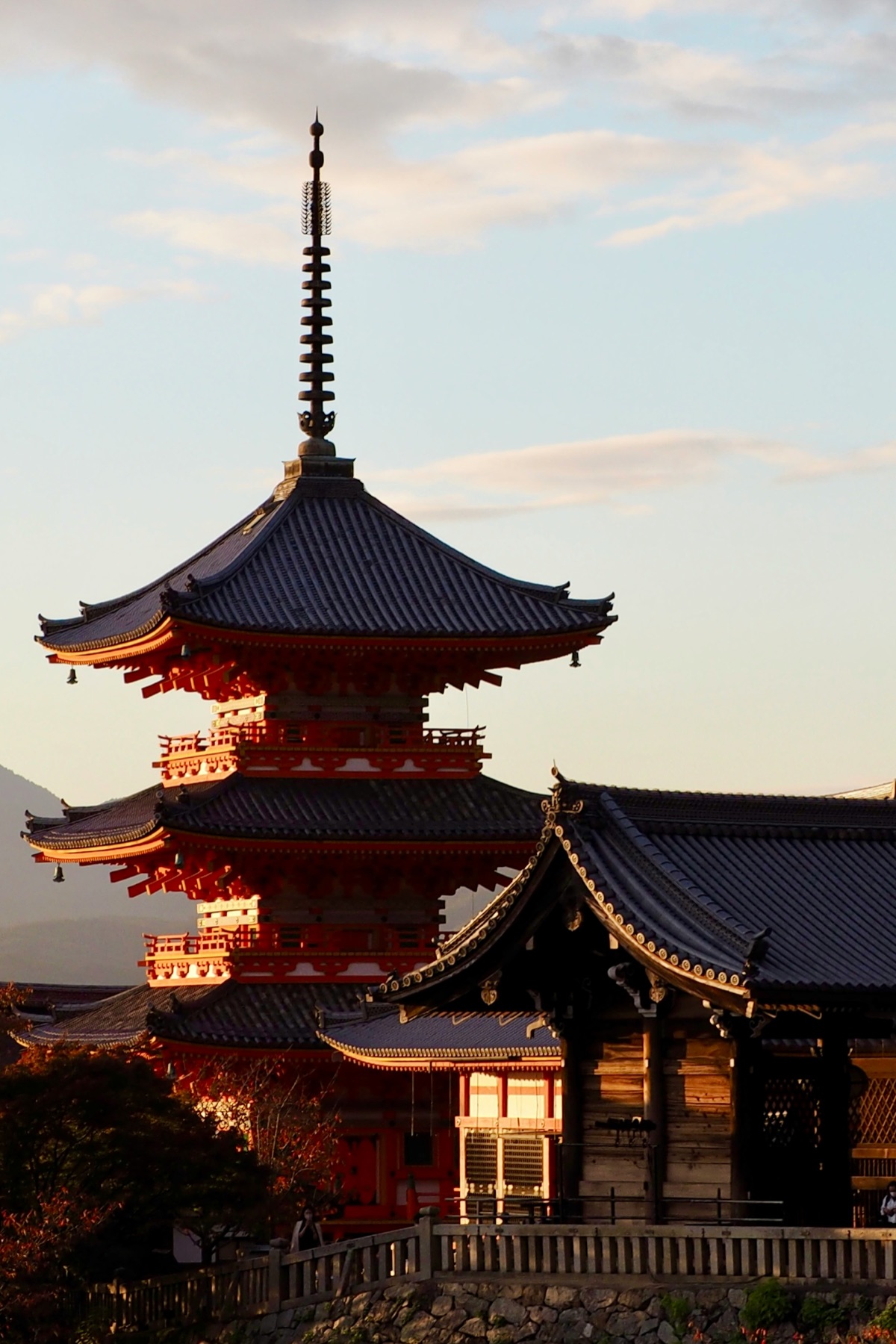
Kiyomizu-dera (清水寺) is arguably Kyoto's most famous temple — and for good reason. Perched on a hillside overlooking the city, its massive wooden stage offers breathtaking views that have drawn pilgrims and tourists for over 1,200 years. Whether you're visiting for the first time or returning for a seasonal view, this guide covers everything you need to know.
A Brief History of Kiyomizu-dera
Founded in 778 AD by the monk Enchin, Kiyomizu-dera predates Kyoto itself (which was established as Heian-kyo in 794). The temple's name means "Pure Water Temple," derived from the Otowa Waterfall that flows beneath the main hall. The current buildings date mostly from 1633, reconstructed by Tokugawa Iemitsu, the third shogun of the Edo period.
In 1994, Kiyomizu-dera was designated a UNESCO World Heritage Site as part of the "Historic Monuments of Ancient Kyoto."
What to See at Kiyomizu-dera
1. The Main Hall (Hondo) & Wooden Stage
The temple's crown jewel is the Hondo (main hall), built without a single nail using traditional Japanese woodworking techniques. The famous "stage of Kiyomizu" extends 13 meters from the hillside, supported by 139 massive wooden pillars. The view from here spans all of Kyoto — and on clear days, you can see as far as Osaka.
2. Otowa Waterfall
Below the main hall, the Otowa Waterfall splits into three streams, each representing a different wish: longevity, success in love, and success in studies. Visitors use long-handled ladles to drink from one (or all three) — but be warned: drinking from all three is said to be greedy!
3. Jishu Shrine (Love Fortune)
Behind the main hall sits Jishu Shrine, dedicated to the god of matchmaking. The shrine features two "love stones" placed 18 meters apart. If you can walk from one stone to the other with your eyes closed, your love wish will come true.
4. Okunoin Hall & Inner Sanctuary
A quieter, less-visited area of the temple complex. The view from Okunoin's hall is stunning, offering a different angle of the main hall and stage.
5. Three-Story Pagoda
The bright red pagoda near the entrance is one of Kyoto's most photographed structures. It's especially beautiful during cherry blossom season and autumn foliage.
Best Time to Visit
| Season | Highlight | Crowds |
|---|---|---|
| Spring (Mar-Apr) | Cherry blossoms & illuminations | Very high |
| Summer (Jun-Aug) | Lush greenery, cooler mornings | Moderate |
| Autumn (Nov-early Dec) | Red maple illuminations | Very high |
| Winter (Dec-Feb) | Snow on the stage (rare) | Low |
Pro tip: Arrive before 8:00 AM or after 4:00 PM to avoid the heaviest crowds. The temple is open until 6:00 PM (later during illumination periods).
How to Get There
- Bus: Take bus #206 or #100 from Kyoto Station to "Kiyomizu-michi" stop (about 15 min), then walk uphill 10 min
- Taxi: About ¥1,200-1,500 from Kyoto Station (10 min)
- On foot: About 30 min from Gion along the atmospheric Sannenzaka/Ninenzaka streets
Nearby Attractions
- Sannenzaka & Ninenzaka — preserved historic streets with shops and cafes
- Kodai-ji Temple — Zen temple with beautiful gardens (5 min walk)
- Yasaka Pagoda (Hokan-ji) — iconic five-story pagoda (10 min walk)
- Gion District — Kyoto's famous geisha district (15 min walk)
FAQ
How much is the entrance fee?
¥400 for adults, ¥200 for children (6-15 years). Cash only.
How long should I spend at Kiyomizu-dera?
Plan for 1.5-2 hours to see everything at a relaxed pace. Add 30-60 min if you want to explore Sannenzaka street on the way up.
Is it wheelchair accessible?
The main hall and stage are accessible via a ramp. However, the Otowa Waterfall and some inner areas have stairs only.
Can I wear a kimono to visit?
Absolutely! Wearing a kimono to Kiyomizu-dera is one of the most popular experiences in Kyoto. The walk up through Sannenzaka is especially beautiful in traditional dress.
Related reading
- Golden Hour at Kiyomizu-dera: Capturing the Essence of Kyoto's Iconic Temple
- Ryōanji Temple: Kyoto's Most Famous Zen Rock Garden — Complete Guide 2026