 By Yuki Tanaka
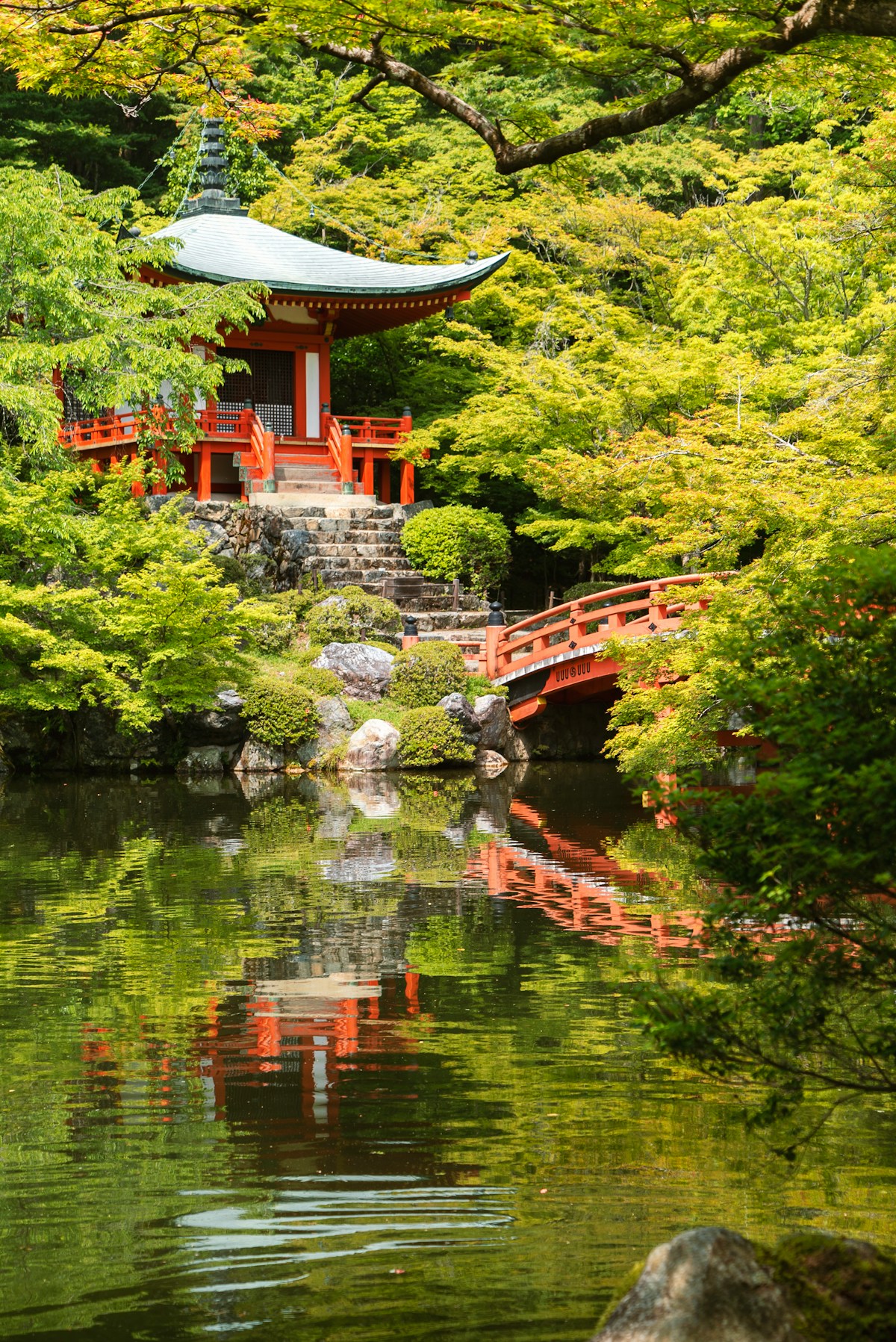
Nanzen-ji is the temple that makes first-time visitors do a double take. Most of Kyoto’s temples fit a familiar pattern — wooden halls, raked gravel, ancient trees. Nanzen-ji breaks every expectation: at its heart stands a red-brick Roman aqueduct, a leftover of the 19th-century waterworks that once carried Lake Biwa’s water into Kyoto.
That’s not the only surprise. The gate you walk through is one of the finest examples of Zen architecture in Japan, the head priest’s quarters open onto a nationally famous rock garden, and from the forested hills behind the temple you get one of the best free views over the city. Nanzen-ji rewards slow walking — and it happens to be one of the most photogenic spots in eastern Kyoto for a kimono day.
Why Nanzen-ji Breaks the Kyoto Temple Mold
Founded in 1291 by Emperor Kameyama as the head temple of the Rinzai Zen Nanzen-ji school, Nanzen-ji was repeatedly destroyed by fire and war and repeatedly rebuilt — most dramatically in the 16th century under warlord Toyotomi Hideyoshi’s patronage. What you see today is a sprawling complex of halls, sub-temples, and gardens spread across the wooded foothills at the eastern edge of Kyoto, where the city meets the mountains.
Because the complex is large and the crowds are thinner than at Kiyomizu-dera or Kinkaku-ji, Nanzen-ji feels like a temple you “discover” rather than one you queue for. It’s the kind of place locals bring visiting friends — and it photographs beautifully in every season.

How to Get to Nanzen-ji
- By subway: Tozai Line to Keage Station, then a 10-minute walk uphill past the Keage incline. This is the most reliable option.
- By bus: City bus #5 from Kyoto Station to the Nanzenji-Eikando-michi stop (about 30 minutes).
- On foot from the Philosopher’s Path: Nanzen-ji is a natural 15-minute extension at the southern end of the path — walk it after visiting Ginkaku-ji.
- From Higashiyama: From Gion or Yasaka Shrine it’s a pleasant 30–40 minute walk (or a short bus ride) through quiet residential streets — a great route if you’re already in kimono.
What to See at Nanzen-ji (in Walking Order)
1. Sanmon — the “Gate of the Dragon Gate”
The enormous two-story main gate was rebuilt in 1628 and is one of the largest Zen gates in Japan. Stand underneath it and look up — the scale is the point. The gate is also where the famous 17th-century thief Ishikawa Goemon reportedly sat, admiring the view (legend says he was later caught here).
2. Hatto (Dharma Hall)
Behind the gate, the Hatto hall features a striking dragon painted on the ceiling. The dragon is said to have been painted in a single night — legend claims the artist disappeared afterward, never to be seen again.
3. Hojo Gardens — the “Tiger Cubs Crossing” Rock Garden
The head priest’s quarters (Hojo) open onto a famous dry landscape garden. Raked gravel represents the river, and the placement of stones is said to suggest tiger cubs crossing the water — the garden’s nickname is Tora no Ko Watashi. Sit on the wooden veranda and let the place do its work. Note the sliding-door paintings inside the Hojo are also worth a slow look.
4. Suirokaku — the Aqueduct
Built between 1888 and 1890 as part of the Lake Biwa Canal, the brick aqueduct carries water through the temple grounds. The arches echo a Roman aqueduct — hence the nickname “Kyoto’s Roman ruins.” In autumn the maple trees around it turn crimson, making this the single most photographed corner of the temple.

Best Time to Visit Nanzen-ji
- Morning (9:00–10:30): The light is soft, tour groups are still arriving, and the gardens feel almost private. This is the window for photographs.
- Mid-November to early December: Peak maple season. The temple holds night illuminations in late November when the leaves are lit after dark — check the official dates, as they change every year.
- Late March to early April: Cherry blossom season, especially along the approach and the nearby Keage incline, which becomes a pink tunnel.
- Opening hours: 9:00–17:00 (last entry 16:30); December–February closes at 16:30. The garden and Sanmon require a combined ticket (about 600 yen).
Best Photo Spots & a Short Photo Walk
Nanzen-ji is compact enough to photograph in under an hour. Here’s the order that works:
- The Sanmon gate from the gravel path — stand back and include the whole gate with the sky behind it.
- The Hojo veranda — a seated shot on the wooden edge with the rock garden behind you. (Shoes off, quiet voices — it’s a meditation space.)
- The Suirokaku aqueduct — the classic shot is from the path that runs beside it, with the arches receding into the trees. In autumn, the maples frame it perfectly.
- The forest path behind the aqueduct — leads uphill toward the sub-temples and rewards you with a view over Kyoto’s rooftops.
Because Nanzen-ji sits at the top of the eastern hills, the walk between photo spots is gentle — no steep staircases like Kiyomizu-dera. That makes it an easy, relaxed stop on a kimono photo day: dress once, and the whole complex works as your backdrop.
What to Wear for Photos at Nanzen-ji
The stone, wood, and gravel palette of Nanzen-ji suits muted, elegant colors — deep blues, soft greens, cream, and burgundy read beautifully against the red brick and dark wood. The complex’s quiet courtyards mean you can photograph without an audience, which matters when you’re in a formal kimono and moving slowly.
If you’re planning a kimono day in eastern Kyoto, the standard route is Kiyomizu-dera → the slopes of Sannenzaka → Gion — and Nanzen-ji slots in neatly afterward (or instead of the crowds, if you prefer calm). A kimono rental near Kiyomizu or Gion means the dressing happens close to the photo route, and the shops carry hundreds of kimono to match the season — maple motifs in autumn, cherry blossoms in spring.
Nanzen-ji Combined Route (Half Day)
Nanzen-ji works best as part of a wider eastern Kyoto walk:
- Option A — The Philosopher’s Path loop: Ginkaku-ji → Philosopher’s Path (30–40 min) → Nanzen-ji → Keage. Full day, mostly downhill.
- Option B — The maple walk (autumn): Nanzen-ji → Eikando Temple (2-min walk, arguably Kyoto’s best autumn leaves) → back through the Keage area. Half day.
- Option C — From Higashiyama: Kiyomizu-dera early → Sannenzaka → Gion lunch → taxi or bus to Nanzen-ji for the late-afternoon light. Pairs well with a kimono day.
Nearby worth adding: Eikando (autumn), Keage Incline (spring blossoms), and Murin-an villa (a quiet Meiji-era garden with a tiny waterfall).
FAQ
How much does Nanzen-ji cost?
Access to the grounds and Sanmon area is free; the Hojo gardens and interiors require a combined ticket of about 600 yen. Sub-temples in the complex each have their own small fees.
How long should I spend at Nanzen-ji?
An hour for the main complex; 90 minutes if you add the forest path and a sit on the Hojo veranda. Combined with the Philosopher’s Path or Eikando, it becomes a half-day outing.
Is Nanzen-ji wheelchair or stroller friendly?
Mostly yes — the main paths are wide and paved, and the Hojo entrance has a ramp. The forest path behind the aqueduct is steeper and has steps.
Can I visit Nanzen-ji in a kimono?
Absolutely — the grounds are gentle to walk, and the quiet gardens make it one of the best temples in Kyoto for kimono photographs. Rent near Kiyomizu or Gion so the dressing doesn’t eat into your day, and book the earliest kimono rental slot to be walking by mid-morning.
Is Nanzen-ji worth visiting in summer?
Yes — the forested hills keep parts of the complex noticeably cooler, and the greenery around the aqueduct is lush. It’s a good mid-day refuge before the Gion evening.
Planning a kimono day around eastern Kyoto? Kanwa Kimono has two shops — Gion/Yasaka and Kiyomizu-dera — with 500+ kimono and plans starting at ¥3,300. Both open at 9:00; dressing takes about 40 minutes.