Kyoto in late November is the closest thing Japan has to a national advertisement. The maples turn a shade of red that photographs itself, temples light up after dark, and the whole city smells faintly of grilled chestnuts. It is also, alongside cherry-blossom season, the most crowded and most expensive time of year. The trick is knowing exactly when the leaves peak — and which spots to hit before the tour buses do.
Here is everything we know so far about autumn 2026 in Kyoto: typical timing, the spots worth planning around, night illuminations, how to see the leaves without spending your whole trip in a queue — and how to dress for it. If you are visiting in a kimono, we have included what to wear and where to shoot at the end.
When is autumn leaf season in Kyoto?
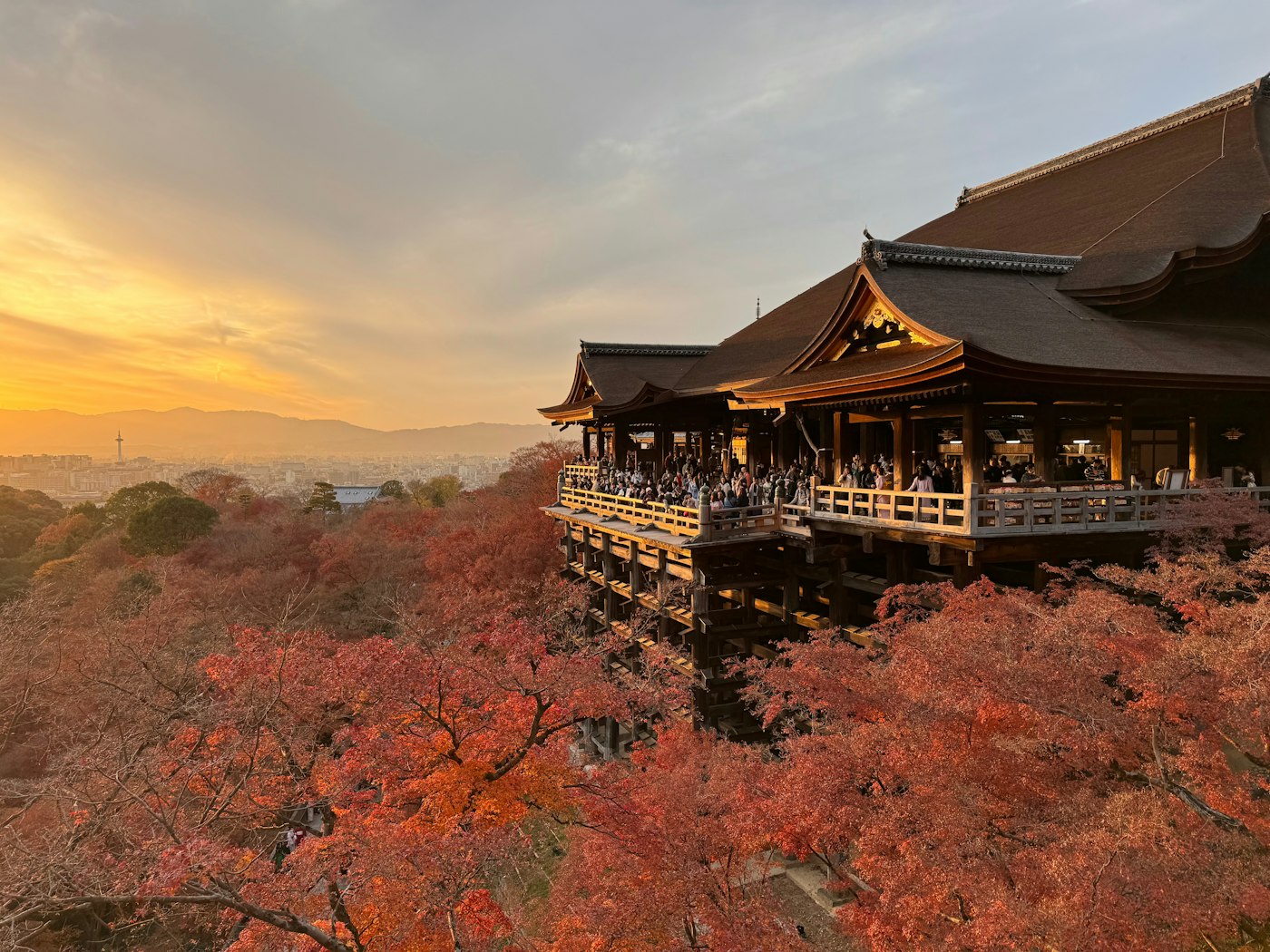
Kyoto’s peak color window is mid-November to early December, with the deepest reds usually landing in the last two weeks of November. That is when the city’s two most famous leaf spots — Tofukuji and Kiyomizu-dera — hit full color.
2026 forecast update (Oct 29): peak color is running later than usual this year. The Japan Meteorological Association expects Tofuku-ji and Eikando in late November to early December and Kiyomizu-dera in early December. Weathernews gives roughly Nov 23 for Tofuku-ji, Nov 24 for Eikando and Nov 25 for Kiyomizu-dera. The two sources differ by a few days to a week, so plan for a late-November-to-early-December peak and leave slack through the first week of December. Forecasts get revised, so check the latest version before you travel.
The table below shows the long-term typical windows; expect this year to land a few days to a week later.
Typical peak dates, spot by spot
Leaves don’t turn at the same time across the city. Higher, cooler spots (Mt. Hiei, Ohara) go first; central temple areas follow about two weeks later. Use this as your planning table:
| Spot | Typical peak | Why it’s worth it |
|---|---|---|
| Mt. Hiei / Ohara | Late Oct – mid Nov | First to turn; quiet, mountain scenery |
| Tofukuji | Mid Nov – early Dec | Tsutenkyo Bridge over a valley of maples — the classic view |
| Kiyomizu-dera | Mid Nov – early Dec | Stage view over the city; night illumination |
| Eikando | Mid Nov – early Dec | Reflections in the pond; famous light-up |
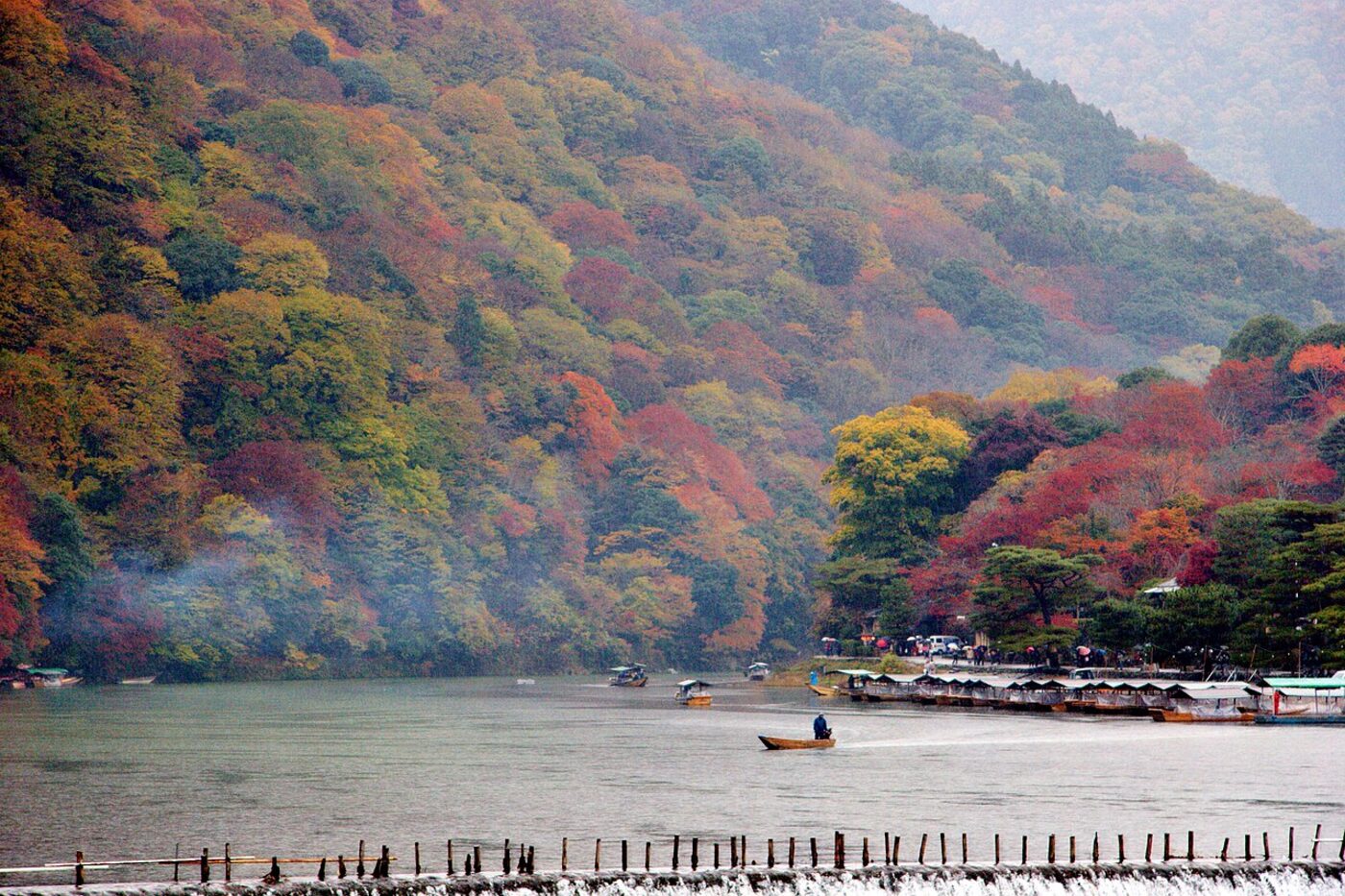
| Arashiyama (Jojakkoji, Tenryuji) | Mid Nov – late Nov | Maples over the Katsura River; bamboo grove nearby |
| Kodai-ji | Mid Nov – early Dec | Night illumination in a garden designed for evening |
If you only have one day for leaves, make it Tofukuji in the morning (it opens at 8:30 and the crowds arrive by 10) and Kiyomizu-dera in the late afternoon, when the light hits the maples from the side.
Kyoto autumn night illumination 2026 (light-up dates)
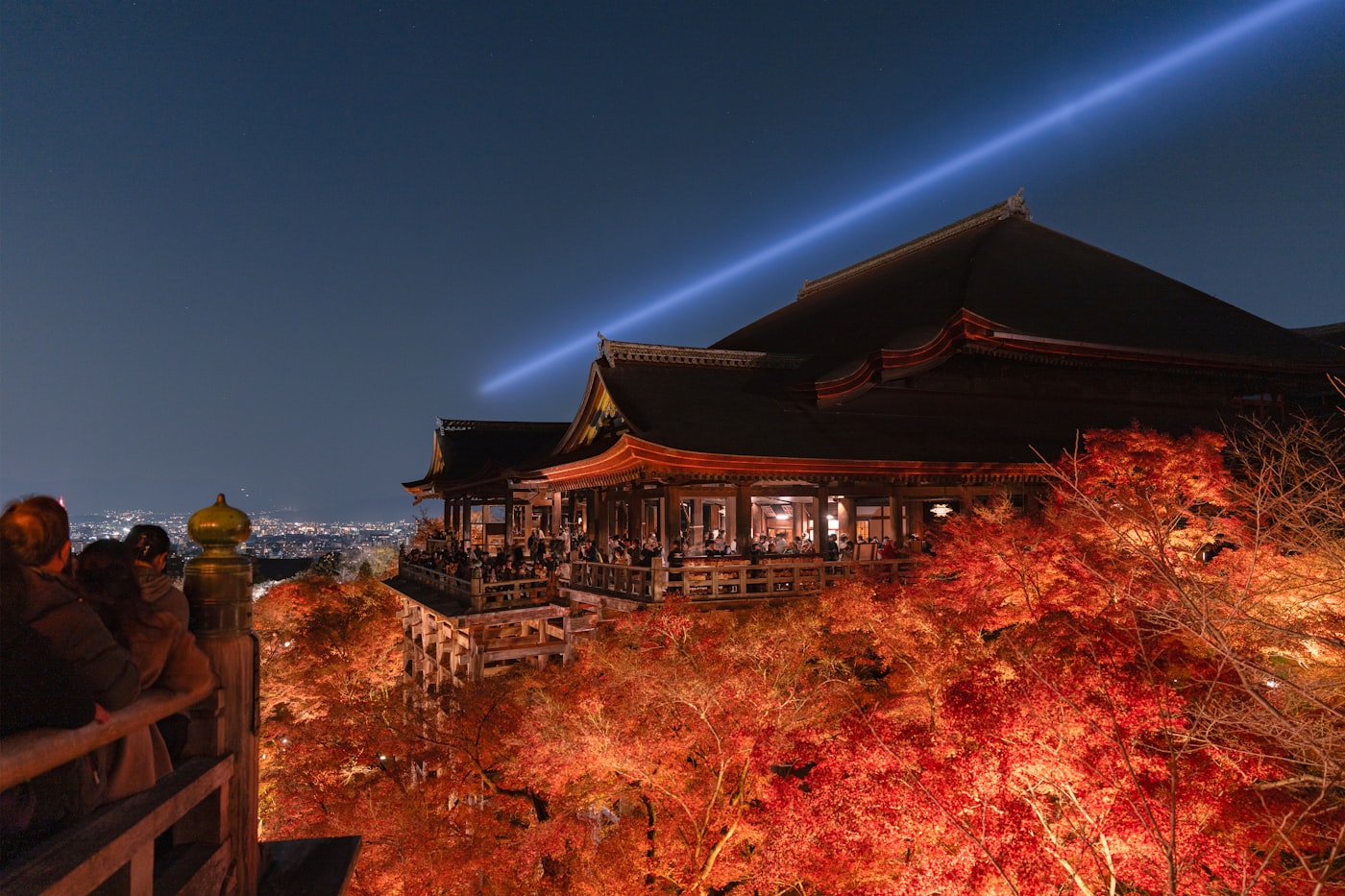
Night viewing is one of Kyoto’s best autumn experiences, and several temples run special evening openings from mid-November into early December. Gates open around 17:00-17:30 (sunset in late November is around 16:50).
2026 evening opening dates (as of Oct 29)
- Kōdai-ji: Oct 23 – Dec 13
- Tōfuku-ji: autumn special opening from mid-November to about Dec 6 (evening illumination from Nov 18)
- Eikandō: Nov 20 – Dec 6
- Kiyomizu-dera: Nov 21 (Sat) – Nov 30 (Mon)
These dates come from travel media and temple announcements; admission fees, entry times and reservation rules can change, so confirm on each temple’s official site before you go. In a late year, the second half of each run usually shows more color.
Three worth planning around:
- Kiyomizu-dera — the wooden stage lit against the city skyline. Go on a weekday; weekend queues can exceed an hour.
- Eikando — the classic “autumn leaves at night” shot, with maples reflected in the pond.
- Kodai-ji — a smaller, calmer garden near Kiyomizu, with bamboo lit up too. Easier to get into on short notice.
How to beat the crowds
Late November is peak season for domestic tourism too — Japanese travelers take their own leaf-viewing trips (“momijigari”). A few rules we tell our guests at Kanwa:
- Go at opening. Tofukuji, Kiyomizu and Eikando are dramatically quieter before 9:30.
- Avoid weekends. Saturdays in late November are the single busiest days of the year in Higashiyama.
- Stay in one area per day. The traffic between Higashiyama, Arashiyama and Ohara eats hours; pick one and go deep.
- Use the subway where you can. The 86 and 100 buses to Kiyomizu crawl in leaf season. The Keihan line gets you close, and walking the last stretch past Ninenzaka is half the fun.
What to book before you go
If your November trip is still ahead of you, get these three things sorted early:
- Hotels. November 20 – 30 is one of the two most expensive weeks of the year in Kyoto. If your dates are flexible, the first week of December is noticeably cheaper and the leaves are still out.
- Kimono rental. Autumn is our busiest season at Kanwa. Book online to lock your time slot — walk-ins on peak Saturdays can wait 1-2 hours. Both shops (Gion and Kiyomizu) are a short walk from the best leaf spots in Higashiyama.
- Restaurant reservations. Kaiseki places book out weeks ahead in November. Reserve as soon as your dates are firm.
Photography quick tips
- Morning light (8:00-9:30) is soft and the crowds are thin — the best hour for clean shots.
- Overcast days are actually great for maples: the reds glow without harsh shadows.
- Bring a small umbrella or lens cloth — late November can be damp, and leaves on wet stone are a classic Kyoto shot.
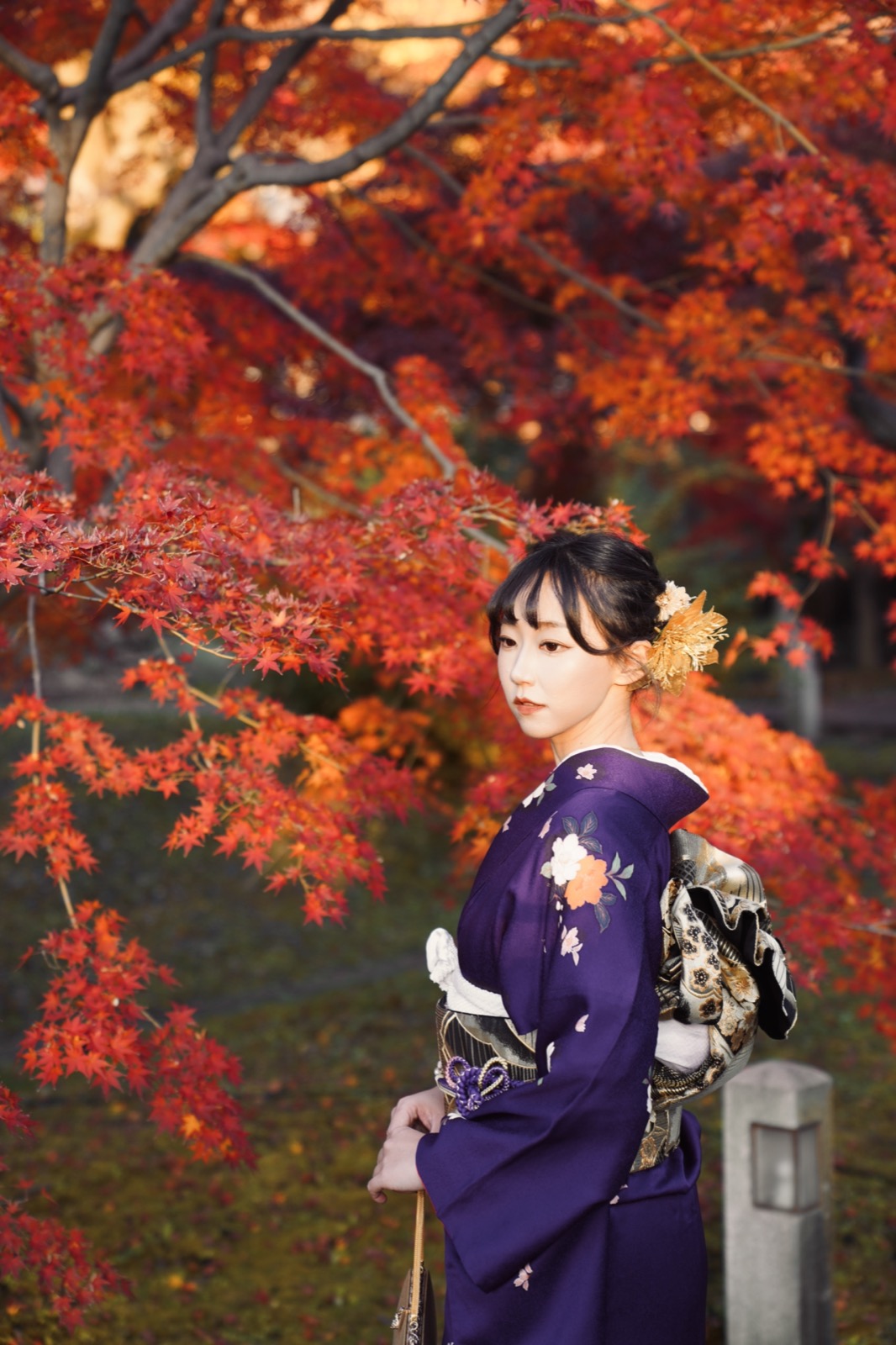
- In kimono, the colors pop beautifully against red maples. Our Kiyomizu shop is a 5-minute walk from the temple’s west gate — many guests do photos there in the morning, then walk to the illumination in the evening.
Dressing for the leaves: kimono in late November
If you plan to see the maples in a kimono, two things matter: color and warmth. Deep purple, black-and-gold, and dark green stand out against red maples; white and pale tones blend into the background. And late-November mornings in Kyoto sit around 5–10°C, so a lined kimono plus a thermal under-layer makes the difference between a great morning and a shivering one.

Our Kiyomizu shop is a five-minute walk from Kiyomizu-dera, which means you can be dressed, out, and shooting at the maples before the tour groups arrive. If you are wondering about timing, what to wear underneath, or which plan fits a foliage-season day, we wrote a full guide to renting a kimono for autumn. Read the complete autumn kimono guide →
Planning a kimono day in Kyoto this autumn? Kanwa Kimono has two shops near Gion and Kiyomizu-dera, 500+ kimono to choose from, and plans starting at ¥3,300.
Turn your autumn-leaves day into a kimono photo route
Late November is the moment when Kyoto's maple colors and old streets work together. If you want the easiest flow, reserve a morning kimono slot, start around Kiyomizu, walk the preserved slopes, then finish in Gion before sunset.
- Best kimono photo spots in Kyoto for choosing the right temple, street, and garden.
- Kimono photoshoot poses for couples, solo portraits, and maple-leaf details.
- Kiyomizu to Gion walking route for a realistic half-day autumn plan.
Book a Kanwa fitting time or compare kimono plans and prices.
Plan the kimono side of your autumn trip
FAQ
When exactly do Kyoto’s maples peak in 2026?
The typical peak is the last two weeks of November through the first week of December. For 2026, the Japan Meteorological Association expects late November to early December (Kiyomizu-dera in early December), while Weathernews points to Nov 23–25 (as of Oct 29). Leave slack through the first week of December.
Which temple has the best night illumination?
Kiyomizu-dera has the most dramatic setting (the stage lit against the city skyline) but the longest queues. Eikando is the classic “maples reflected in a pond” shot. Kodai-ji is smaller, calmer, and easier to get into on short notice.
Is it cold in a kimono in late November?
Yes — mornings are around 5–10°C. Rent a lined kimono and add the thermal under-layer; a shawl or light coat also helps between temples.
Can I wear a kimono to the night illuminations?
Daytime rental runs until 17:00, which is exactly when the illuminations start. Most guests return the kimono, change, and go back out for the lights — or plan the evening shoot at a temple near the shop.
What colors photograph best against red maples?
Deep purple, black-and-gold, and dark green. White and cream look beautiful in general but blend into the red background.
Should I book kimono rental in advance for November?
Yes. Late-November weekends sell out, and the 9:00 fitting slots on peak Saturdays can book out weeks ahead. Book online here.