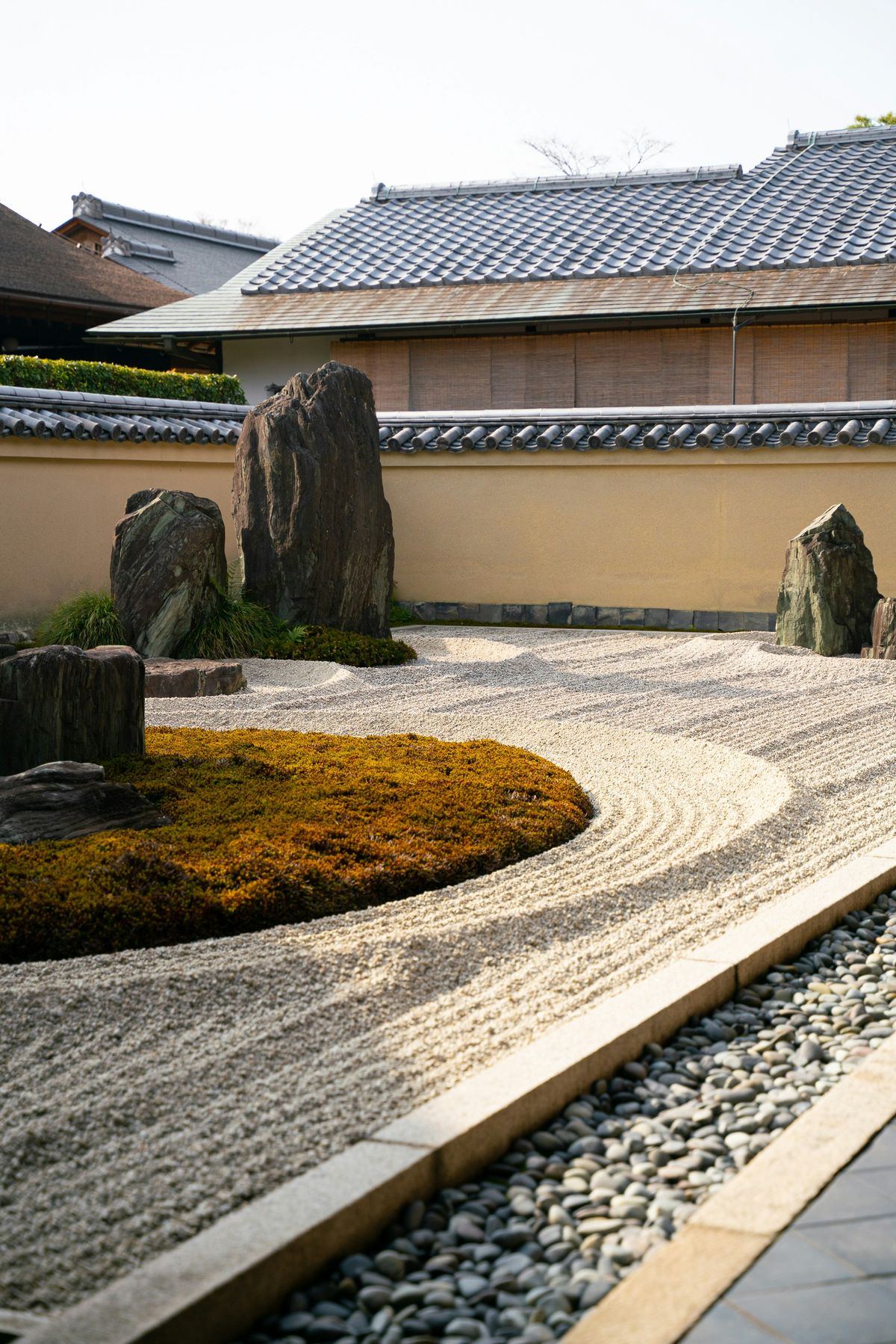
Ryōanji Temple (龍安寺) is home to Japan's most famous karesansui (dry landscape) garden — and perhaps its most puzzling. Fifteen stones rest on a bed of white gravel, arranged so that from any viewing angle, you can see only 14 at a time. Legend says that only when you attain enlightenment can you see all 15.
A Brief History
The site began as a villa for the aristocratic Fujiwara family during the Heian Period. In 1450, it was converted into a Zen temple by Hosokawa Katsumoto, a powerful military leader. The temple belongs to the Myōshinji school of Rinzai Zen Buddhism. In 1994, Ryōanji was designated a UNESCO World Heritage Site as part of the "Historic Monuments of Ancient Kyoto."
The Rock Garden (Karesansui)
The rectangular garden measures just 25 by 10 meters — deceptively small for its global reputation. White gravel is raked daily into precise patterns by the temple monks. The 15 stones are arranged in five groups on islands of moss. The wall surrounding the garden, made of clay boiled in oil, has aged into a beautiful patina that changes color with the seasons.
No one knows for certain who designed the garden or what it represents. Theories range from islands in an ocean, to a tiger carrying cubs across water, to abstract representations of Zen concepts like infinity and emptiness. The ambiguity is intentional — you are meant to find your own meaning.
Beyond the Rock Garden
- Kyōyōchi Pond: A beautiful stroll garden dating back to the 12th century, featuring islands, bridges, and seasonal flowers. The pond is home to mandarin ducks.
- Tsukubai (Stone Water Basin): A famous basin inscribed with the characters "吾唯足知" (ware tada taru o shiru), meaning "I only know contentment" — a core Zen teaching.
- Hōjō (Abbot's Quarters): The main hall features painted sliding doors (fusuma) by Kanō School artists, depicting dragons and landscapes.
- Restaurant Ryōanji Yudofuya: Famous for yudofu (hot tofu), a Kyoto specialty served in a tranquil garden setting.
Seasonal Highlights
| Season | What to See |
|---|---|
| Spring (Mar–May) | Cherry blossoms around Kyōyōchi Pond; fresh green moss in the rock garden |
| Summer (Jun–Aug) | Verdant maples and lotus flowers in the pond; early morning is best for meditation |
| Autumn (Sep–Nov) | Stunning red and gold maple leaves throughout the grounds |
| Winter (Dec–Feb) | Snow on the rock garden is a rare but magical sight; fewer crowds |
Practical Information
| Item | Details |
|---|---|
| Address | 13 Ryōanji Goryōnoshitachō, Ukyō-ku, Kyoto |
| Hours | 8:00–17:00 (Mar–Nov), 8:30–16:30 (Dec–Feb) |
| Admission | Adults ¥600, High school ¥500, Children ¥300 |
| Access | Bus #50 or #55 from Kyoto Station (40 min); or JR San-in Line to Enmachi + bus |
| Best Time | Early morning (8:00–9:00) for minimal crowds at the rock garden |
FAQ
Q: Can I take photos of the rock garden?
A: Yes, photography is allowed, but tripods and flash are prohibited. Be mindful of others meditating.
Q: Is there a dress code?
A: No formal dress code, but respectful attire is expected. Wear comfortable shoes for walking the grounds.
Q: How long should I plan for a visit?
A: Allow 45–60 minutes. The rock garden itself deserves at least 15 minutes of quiet contemplation.
Q: Can I wear a kimono to visit?
A: Absolutely! Ryōanji's peaceful gardens and rock garden provide a stunning backdrop for kimono photos. The flat paths make walking in zori easy.