 By Yuki Tanaka
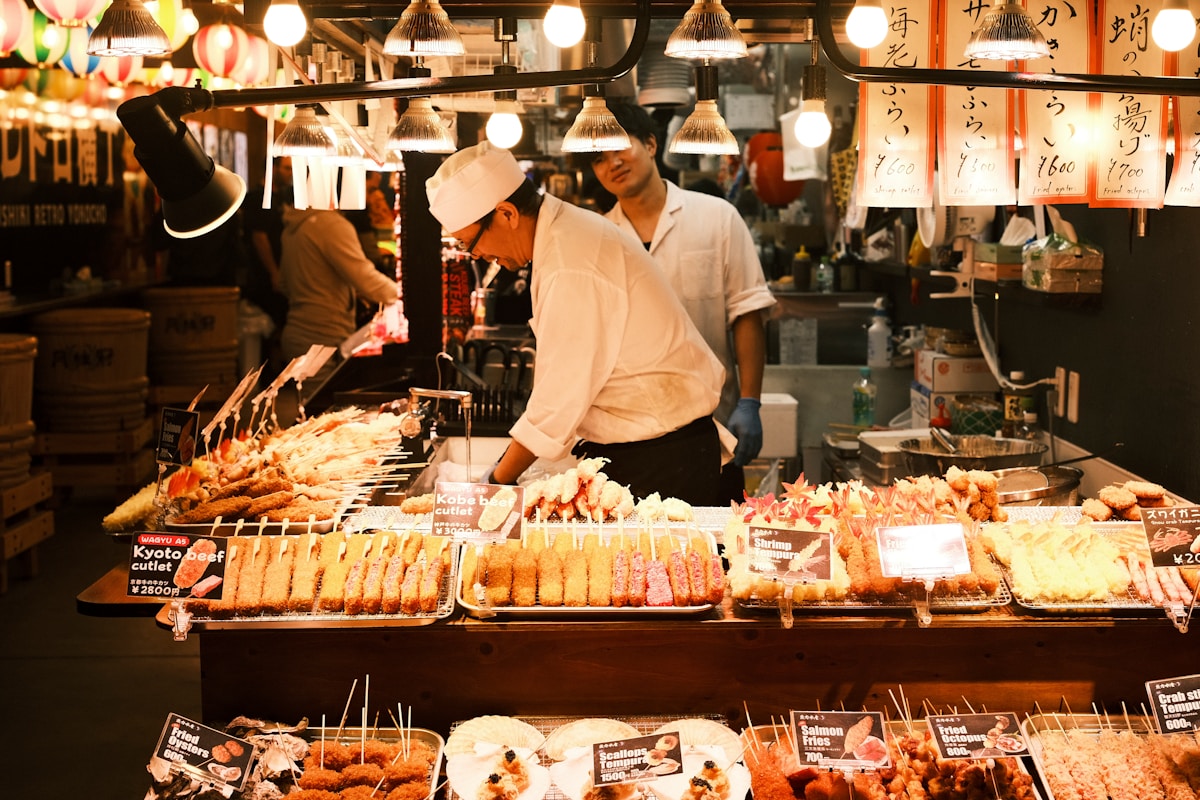
Kyoto's Kitchen
If you want to understand Kyoto's food culture in one afternoon, go to Nishiki Market. Nicknamed "Kyoto's Kitchen" (京都の台所), this narrow, covered arcade has been feeding the city for over four centuries. Five blocks of family-run stalls selling everything from live eels to hand-carved bamboo whisks for matcha — and plenty of things on sticks for hungry visitors.
Unlike the touristy food streets of Osaka or Tokyo, Nishiki still functions as a real market where locals buy their weekly groceries alongside tourists snacking their way through.
What You Must Try (And What to Skip)
| Food | What it is | Verdict |
|---|---|---|
| Tamagoyaki on a stick | Sweet layered omelette, served warm on a skewer | ✅ Must try |
| Yuba (tofu skin) | Creamy sheets skimmed from heated soy milk | ✅ A Kyoto specialty |
| Tsukemono (pickles) | Vegetables preserved in rice bran, miso, or vinegar | ✅ Free samples everywhere |
| Grilled unagi (eel) | Skewered freshwater eel, glazed with sweet soy | ✅ Luxury street food, ¥500-800 |
| Takoyaki | Octopus balls | ⚠️ An Osaka thing — save space for Kyoto specialties |
| Matcha soft serve | Green tea ice cream | ✅ Get the one with real matcha powder |
| Soy milk doughnuts | Tiny, fluffy, fried doughnut holes | ✅ Addictive, line moves fast |
Beyond Food: What Else to Buy
- Aritsugu knives: At the market's west entrance, this 450-year-old knife shop once forged swords for the imperial household. They'll engrave your name on the blade in Japanese characters.
- Kyo-yasai (Kyoto vegetables): Even if you're not cooking, the display of purple carrots, Kamo nasu eggplants, and tiny turnips is worth seeing.
- Dashi ingredients: Pick up dried bonito flakes (katsuobushi) and kombu seaweed — the foundation of all Japanese cooking.
- Handmade chopsticks: Beautifully lacquered chopsticks in dozens of designs — lightweight, affordable, genuinely useful souvenirs.
Market Etiquette
- Walk, don't stop in the middle. The arcade is narrow and busy. Step to the side if you need to check your phone.
- Don't eat while walking. In Japan, eating while walking is considered sloppy. Finish your skewer at the stall.
- Cash is king. Many stalls are cash-only. Bring small bills and coins.
- Ask before photographing. A simple "shashin ii desu ka?" (写真いいですか?) goes a long way.
When to Go
Most stalls open by 10:00 AM and close by 6:00 PM. Wednesday is the traditional closing day for many shops. Go mid-morning on a weekday for the best balance of open stalls and manageable crowds. Summer brings seasonal specialties like ayu (sweetfish) grilled on skewers and shaved ice stands at either end of the market.
🍡 Visiting Nishiki Market is the perfect prelude to a kimono stroll through downtown Kyoto. Kanwa is just 10 minutes away.
FAQ
What time does Nishiki Market open and close?
Most shops open by 10:00 AM and close around 6:00 PM. Go mid-morning on a weekday for the best balance of open stalls and manageable crowds.
Is Nishiki Market closed on Wednesdays?
Wednesday is the traditional closing day for many shops, so some stalls will be shut. Avoid Wednesdays if you want the full market.
What should I eat at Nishiki Market?
Tamagoyaki on a stick, yuba (tofu skin), tsukemono pickles, grilled unagi (¥500-800), matcha soft serve, and soy milk doughnuts. In summer, seasonal grilled ayu (sweetfish) appears too.
Is Nishiki Market worth visiting?
Yes. Unlike the touristy food streets of Osaka or Tokyo, Nishiki still functions as a real market where locals do their weekly shopping alongside visitors — the best introduction to Kyoto's food culture in one afternoon.