 By Mei Takahashi
Kobo-san: The Mother of All Flea Markets
On the 21st of every month, the grounds of Toji Temple — a UNESCO World Heritage site — transform into Kobo-ichi (弘法市), commonly called Kobo-san. With over 1,200 stalls spreading across the temple complex, it's one of Japan's largest and oldest flea markets, dating back to the 13th century.
The market honors Kobo Daishi (Kukai), the founder of Shingon Buddhism, who died on the 21st of March, 835. What began as a religious gathering gradually evolved into a sprawling marketplace where pilgrims could buy and sell goods. Today, the market runs from roughly 5:00 AM to 4:00 PM, rain or shine — though rainy days see fewer vendors.
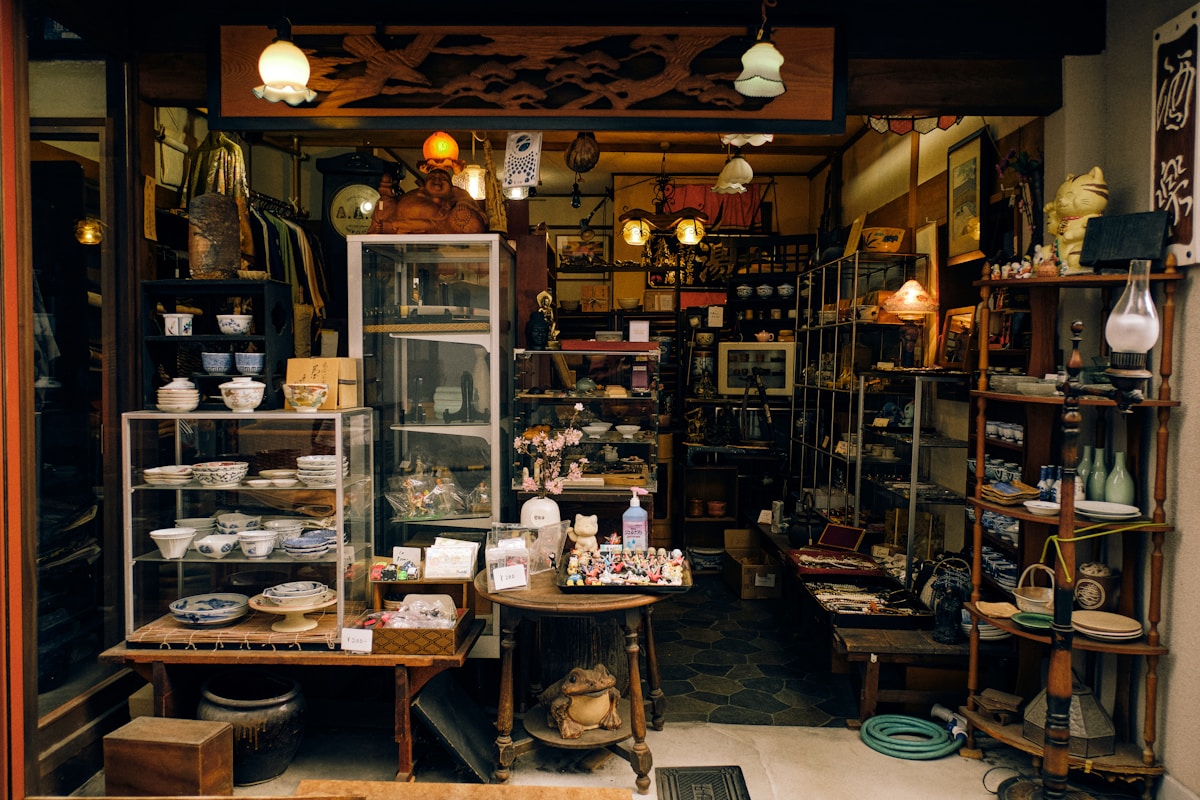
What to find: Vintage kimono and obi (starting from ¥500–1,000), antique ceramics and tea bowls, Buddhist altars and statues, old woodblock prints (ukiyo-e), second-hand tools, plants, street food, and, increasingly, vintage clothing and accessories popular with younger shoppers.
Tenjin-san: The Antique Specialist
Held on the 25th of every month at Kitano Tenmangu Shrine, Tenjin-san (天神市) is Kobo-san's slightly more refined sibling. While still a full-scale flea market with hundreds of stalls, Tenjin-san has a stronger focus on antiques and collectibles. The shrine itself — dedicated to Sugawara no Michizane, the god of learning — is worth visiting for its plum grove (best in late February) and 350-year-old main hall.
Vendors at Tenjin-san tend to specialize more than Kobo-san's generalists. You'll find dedicated stalls for old maps and scrolls, vintage postcards, kimono fabric bolts, and hand-painted kokeshi dolls. Prices are generally comparable to Kobo-san, though rare items command higher prices — and foreign interest has been driving prices up in recent years.
Market Day Strategy
| Market | Date | Location | Best For | Arrive By |
|---|---|---|---|---|
| Kobo-san | 21st monthly | Toji Temple | Everything — kimono, ceramics, food, antiques | 8:00 AM (serious buyers: 6:00 AM) |
| Tenjin-san | 25th monthly | Kitano Tenmangu | Antiques, scrolls, collectibles | 8:00 AM |
Practical Tips
- Cash is king: Almost all vendors only accept cash. Bring plenty of ¥1,000 and ¥500 coins.
- Bargaining: It's acceptable to negotiate politely — "Mou sukoshi yasuku narimasu ka?" (Can it be a little cheaper?) goes a long way. But don't push too hard; this isn't a bazaar.
- Arrive early: The best items disappear within the first two hours. By 2:00 PM, many vendors start packing up.
- Food strategy: Both markets have excellent street food — takoyaki, okonomiyaki, yakitori, and seasonal treats. Budget ¥500–1,000 for a satisfying market lunch.
- Rain plan: Markets run rain or shine, but bring an umbrella and expect fewer vendors in heavy rain.
🏺 Find the perfect vintage kimono at the market, then experience wearing a beautiful kimono in the streets of Kyoto.