You can photograph Kyoto badly from anywhere. Photographing it well is a question of knowing which five or six places reward the effort — and when to be there. This guide covers the essential photo spots for a first visit: the temple stage, the stone slopes, the geisha district, the river, and the torii gates. Each entry includes the best time of day, the angle that works, who it suits, and the honest crowd reality.
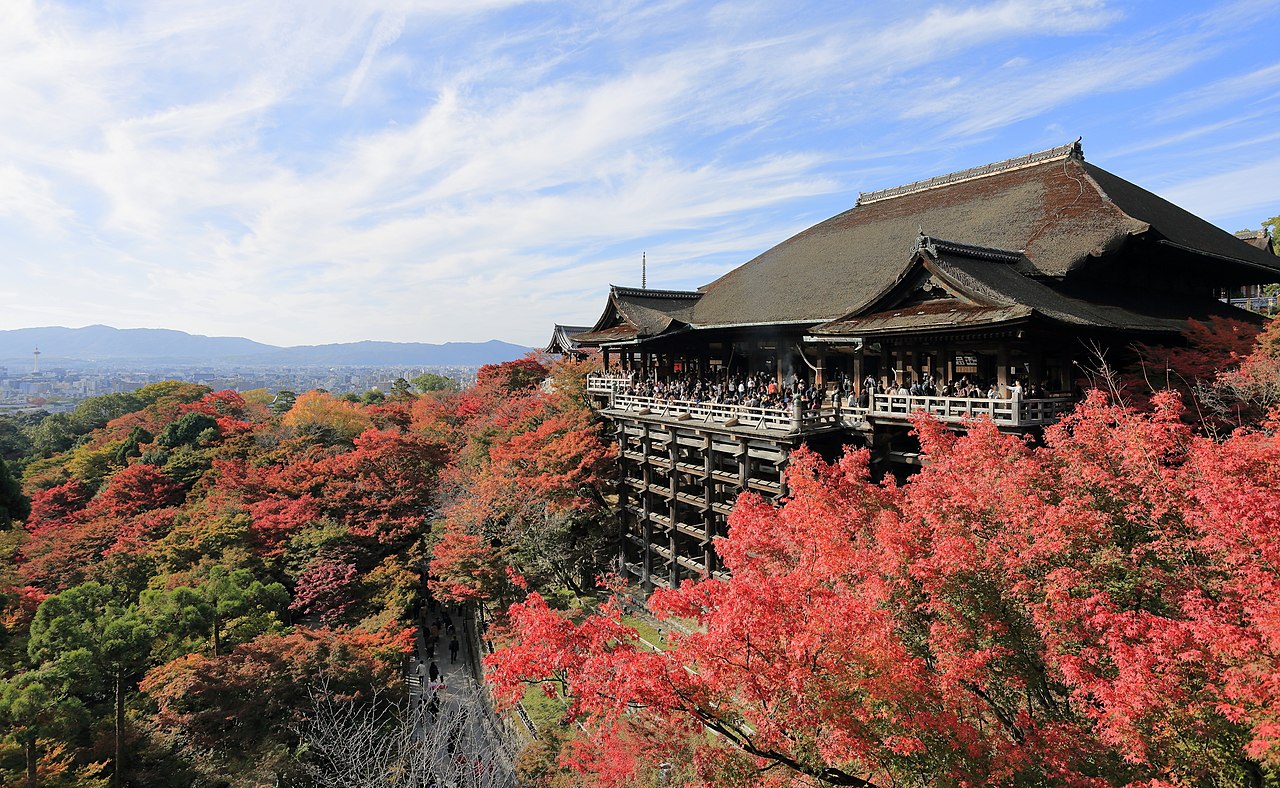
1. Kiyomizu-dera Stage — the Icon
The wooden stage jutting over the eastern hills is Kyoto’s defining image. The classic shot is from the lower east walkway, looking up at the structure against the sky — autumn leaves frame it best. The stage itself is packed from 10:30, so arrive at opening (6:00) or treat it as a 9:00 stop on a Higashiyama morning. Best for: first-timers, anyone who wants the postcard shot.
2. Sannenzaka & Ninenzaka — the Slope
The stone-paved slopes below Kiyomizu-dera are the most photographed streets in Kyoto. The winning angle is from the bottom of Sannenzaka looking up, where the lane curves and the Yasaka pagoda appears at the top. Shops open around 9:30, so 9:00–9:30 is the empty window. Best for: kimono portraits, street scenes, first-timers.
In a kimono, these slopes are the single best backdrop in the city — the traditional facades, the stone, and the quiet side alleys all read beautifully. This is where most visitors take the photo they actually keep.
3. Gion — Lanterns and the Canal
Two different Gions photograph well. Hanamikoji at 9:00–10:00 is lanterns and empty wood; the Shirakawa canal (north of Shijo) is willows over water, best shot from the small bridges looking back at the tea houses. Both are public, both are free, and both are at their best before 11:00. Best for: atmosphere, evening alternative to the crowds.

4. The Kamo River — Golden Hour
The river banks between Sanjo and Shijo are Kyoto’s living room — and at golden hour they’re the best free photo set in the city. The classic frame: the stone steps near Shijo bridge, a seated figure, the western hills behind. Summer brings the noryo-yuka platforms glowing over the water. Best for: candid portraits, couples, sunset.

5. Fushimi Inari — the Torii Tunnels
The endless orange torii gates are open 24 hours — and the crowd pattern follows the sun. Before 7:30 the lower tunnels are quiet; by 9:00 you’re sharing them. The secret is altitude: walk 30–40 minutes past the Yotsutsuji junction and the tunnels empty out completely. The best shot is a straight-on view down a tunnel with no one in it — worth the climb. Best for: early risers, hikers, anyone who wants the classic without the crowd.

How to Combine Them (2 Days)
- Day 1 — Higashiyama: Kiyomizu-dera at 9:00 → Sannenzaka → the lanes to Gion → Hanamikoji & Shirakawa before 11:30 → Kamo River at golden hour. Everything on foot.
- Day 2 — Fushimi Inari: start at 6:30, climb to the empty tunnels, back by 9:30. The rest of the day is yours — Arashiyama or a museum.
Both days are walkable with one rental — a kimono rental plan for the Higashiyama day makes every stop on Day 1 a portrait set. The slopes, the lanterns, and the river all photograph differently in formal dress, and the 9:00 start lines up with the quiet window.
Practical Notes
- Light: mornings are soft and flattering; midday is harsh. Plan the shots you care about for before 11:00.
- Crowds: the 9:00–9:30 window at the slopes, 7:30 at Fushimi Inari, and golden hour at the river are the three magic times.
- What to wear: comfortable shoes for Fushimi Inari (it’s a mountain trail), anything else for the flat Higashiyama route. If you’re renting a kimono for Day 1, choose low, comfortable footwear and let the shop help match the season.
- Charging: you’ll shoot a lot — bring a power bank; there are few sockets in temples.
FAQ
What is the most photographed place in Kyoto?
Kiyomizu-dera’s wooden stage and the Sannenzaka slope below it are the two most photographed spots; Fushimi Inari’s torii tunnels are third, and they’re the only one of the three that works at any hour.
Can I do all of these spots in one day?
Technically yes, but you’d be rushing. The Higashiyama cluster (Kiyomizu, slopes, Gion, river) is one comfortable day; Fushimi Inari deserves its own early morning.
What time should I go to Fushimi Inari for empty photos?
Before 7:30, or climb 40 minutes past the main junction — the upper tunnels are quiet even at 9:00.
Is it better to photograph Kyoto in a kimono?
For portraits, yes — the traditional streets are built for it. The slopes, Gion’s lanterns, and the river all read differently with a kimono in frame. See the Kyoto kimono rental guide for what to choose.
Do I need a special camera?
No — a phone is enough for most of these shots. The magic is timing and position, not equipment.
Shooting the slopes in kimono? Kanwa Kimono’s Gion and Kiyomizu shops are both minutes from the best spots — 500+ kimono, plans from ¥3,300, open daily 9:00.