
Kiyomizu-dera at 9:00 is a different temple from Kiyomizu-dera at 11:00 — and the morning version is the one you’ll actually remember. The wooden stage over the valley, the pagoda, the slopes below: all of it is designed for soft light and empty lanes. This itinerary strings together the temple, the two famous slopes, and the walk to Gion into a single crowd-free morning.
Why Mornings Win
Kiyomizu-dera opens at 6:00 in summer and 6:00–6:30 most of the year, but the tour buses don’t arrive until 10:00. The window from 8:30 to 10:00 is the sweet spot: the temple is open, the light is golden, the slopes below are empty, and the whole eastern district feels like it belongs to you. By 10:30 the stone lanes are shoulder-to-shoulder.
The Itinerary
8:30 — Start at the Base of Sannenzaka
Don’t take the bus to the temple’s main gate. Start at the bottom of Sannenzaka, the famous stone slope, and walk up — you climb through the most photogenic street in Kyoto with almost no one in front of you. The slope’s curve, the machiya facades, and the pagoda reveal at the top are the classic shots, and at 8:30 they’re all yours.
9:00 — The Temple Grounds
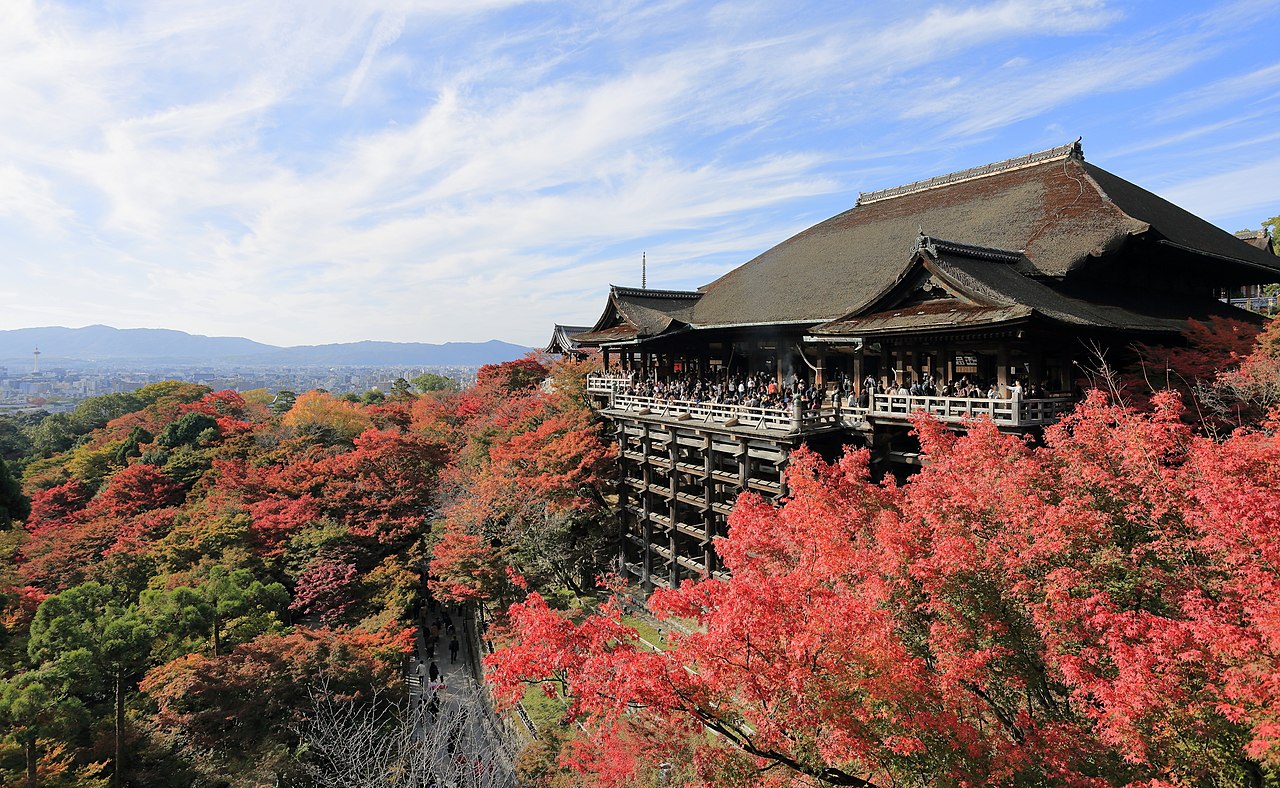
Through the Niomon gate (the entrance gate, free to pass), head straight to the wooden stage — the view over Kyoto’s rooftops is the reason 3 million people come every year. In morning light the city below is hazy and soft; photograph the stage itself from the lower walkways for the classic composition. Then visit the Jishu Shrine at the back of the complex — the love stones (close your eyes, walk between them) are quieter in the morning.
Entry to the main hall and stage area costs about 400 yen.
9:45 — Down the Slopes (Ninenzaka & Sannenzaka)
Leave the temple and walk down through Ninenzaka (the second slope), which joins Sannenzaka lower down. The shops open around 9:30–10:00, so you catch the lanes just as they wake up. Stop for the famous yatsuhashi (cinnamon rice-flour sweets) — try the samples, buy a box, and keep walking.
10:15 — Kodaiji & the Higashiyama Lanes
Ten minutes past Ninenzaka, Kodaiji temple is a quieter alternative to Kiyomizu’s crowds — its garden and bamboo grove are a lovely second stop if you have time (about 600 yen). Otherwise, follow the narrow lanes north; they weave through the eastern district toward Gion with almost no traffic.
11:00 — Maruyama Park & Yasaka Shrine
The lanes deliver you to Maruyama Park — Kyoto’s most famous cherry blossom spot, a pleasant green walk any season — and then Yasaka Shrine’s lantern gate. By now the morning is done: you’ve seen the temple, the slopes, and the shrine before the crowds peaked.
11:30 — Lunch in Gion
From Yasaka Shrine it’s five minutes into Gion’s side streets, where soba, tofu, and kaiseki lunches start around 1,500 yen. You’ve earned it.
Photo Spots on This Route
- Sannenzaka from below — the curve with the pagoda at the top (8:30, empty).
- The stage from the lower east walkway — the classic wooden-stage composition (9:00).
- The Jishu Shrine approach — lanterns and the love stones (9:15).
- Ninenzaka looking down — the slope’s S-curve with machiya rooflines (9:45).
- Yasaka gate from Maruyama side — lanterns against the morning sky (11:00).
Doing It in a Kimono
This itinerary works beautifully in kimono — with one honest caveat: there are steps at the temple and a steady climb up Sannenzaka. If you’re renting, choose comfortable footwear and allow a few extra minutes for the uphill section. The reward is that every stop on this route is a photo location: the slopes, the stage, the shrine gate. Rent near Kiyomizu so the kimono rental near Kiyomizu-dera is a two-minute walk from the start of Sannenzaka — dress at 8:30, and the empty-slope window is yours.
What to Skip If You’re Short on Time
- Kodaiji — lovely but skippable if you want to reach Gion before 11:00.
- The main stage at 11:00+ — if you started late, skip the stage queue and photograph the slopes instead; the stage is mobbed by then.
- The Higashiyama shopping street (Chawan-zaka) — souvenirs are better in Gion, and this lane is the most crowded part of the walk.
FAQ
What time does Kiyomizu-dera open?
Generally 6:00, closing around 17:30–18:00 depending on season. The entrance fee is about 400 yen. Arrive by 8:30–9:00 for the quiet window.
Is Kiyomizu-dera worth the crowds?
Yes — but only if you go early. The stage view is genuinely one of Japan’s great sights; the difference between 9:00 and 11:00 is the difference between a memory and a queue.
How far is it from Kiyomizu-dera to Gion?
About 2 km on foot — 25–30 minutes through the Higashiyama lanes, mostly downhill. This itinerary ends exactly there.
Can I combine Kiyomizu-dera and Fushimi Inari in one morning?
Technically yes (Fushimi Inari is 30 minutes by train from Kiyomizu), but it makes a rushed, exhausting morning. Do Kiyomizu and Gion as planned, and give Fushimi Inari its own early morning.
Is the slope walk difficult in kimono?
Moderate — Sannenzaka is a steady climb with wide stone steps. With comfortable footwear and a slow pace it’s fine; the reward is the empty-lane photographs.
Starting the morning in kimono? Kanwa Kimono’s Kiyomizu shop is two minutes from Sannenzaka — dress at 8:30, walk the empty slopes, and keep the kimono until 17:00. Plans from ¥3,300, open daily 9:00.