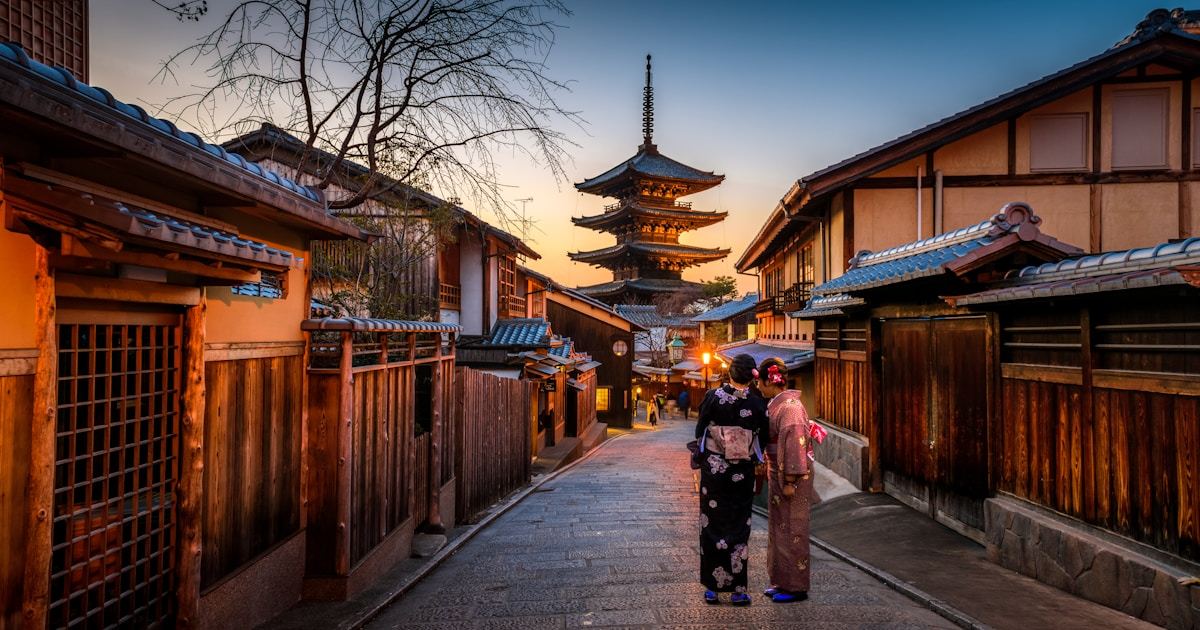
Short answer: most first-time visitors should base themselves in Kyoto and visit Osaka as a day trip. The two cities are only 30 minutes apart by train, so you don’t have to choose — you can have temple mornings in Kyoto and neon nights in Osaka without changing hotels.
But they are very different cities, and which one you “feel” depends on what you want from Japan. Here’s an honest comparison — what each city does best, who should prioritize which, and how to split your time if you’re seeing both.
The One-Paragraph Difference
Kyoto is Japan’s cultural capital: 1,200 years of temples, gardens, tea houses, and narrow wooden streets. It’s slow, beautiful, and photogenic — the city you take a kimono photo in. Osaka is Japan’s commercial capital: food stalls, neon, comedy, and shopping. It’s loud, fast, and delicious — the city you eat in. Both are essential Japan; they just exercise different senses.
Kyoto vs Osaka: The Quick Comparison
- History & atmosphere: Kyoto wins completely — 17 UNESCO World Heritage sites vs Osaka’s handful of castles and shrines.
- Food: Osaka wins for street food (takoyaki, okonomiyaki, kushikatsu in Dotonbori); Kyoto wins for refined kaiseki, temple cuisine, and matcha.
- Shopping: Osaka’s Shinsaibashi and Namba are bigger and cheaper; Kyoto’s Shijo and Teramachi are smaller but more curated.
- Nightlife: Osaka’s Dotonbori and Namba are the most electric in the region; Kyoto’s Pontocho and Kiyamachi are intimate and atmospheric.
- Family & theme parks: Osaka’s Universal Studios Japan is a major draw; Kyoto has no equivalent.
- Photos: Kyoto is a photographer’s dream (temples, geisha districts, kimono streets); Osaka photographs best at night, in neon.
- Pace: Kyoto rewards slow days; Osaka rewards energy. After three days of temples, Osaka’s chaos feels like a release.
Transport: They’re 30 Minutes Apart
- JR Special Rapid (Shin-Osaka ↔ Kyoto): about 15 minutes on the Tokaido line — the fastest link.
- Hankyu Line (Umeda ↔ Kawaramachi): about 45 minutes, drops you in central Kyoto near Gion.
- Keihan Line (Yodoyabashi ↔ Sanjo/Gion): about 50 minutes, scenic along the river.
- Tip: if you stay in Kyoto, Osaka is a painless day trip — same hotels, zero luggage moves. If you stay in Osaka, Kyoto is also a day trip, but you lose the quiet evenings in the temple district.
Who Should Choose Kyoto First
- You came to Japan for culture and photography.
- You want a kimono experience — Kyoto’s streets are built for it, and the rental shops are steps from the best backdrops.
- You prefer quiet mornings and slow afternoons.
- You’re visiting in spring or autumn, when Kyoto’s gardens and temples are at their peak.
Who Should Choose Osaka First
- You’re traveling with kids (USJ, aquarium, teamLab Osaka).
- Food is your priority — Osaka’s street food culture is unmatched.
- You want cheaper hotels and bigger rooms.
- You’re on a shopping run — Dotonbori and Shinsaibashi beat anything in Kansai for retail.
The Ideal Split: 4-5 Days in Kansai
- Days 1–3 — Kyoto: Higashiyama (Kiyomizu-dera, Sannenzaka, Gion), Arashiyama, Fushimi Inari. Base here; go slow.
- Day 4 — Nara day trip: the deer park and Todai-ji’s Great Buddha are a 45-minute train from Kyoto.
- Day 5 — Osaka: morning at Osaka Castle, afternoon in Dotonbori and Shinsekai, evening neon. Return to your Kyoto hotel or move to Osaka for the last night.
If you only have 3 days: all three in Kyoto, and take one evening train to Osaka for dinner in Dotonbori — the best of both without sacrificing a temple morning.
Where the Kimono Day Belongs
There is exactly one city in this comparison where a kimono photo day makes sense, and it’s Kyoto. Osaka’s streets are wide, modern, and neon-lit; Kyoto’s are narrow, wooden, and timeless. A kimono belongs on the slopes of Sannenzaka, under Gion’s lanterns, and on the stone paths of the Philosopher’s Path — not in front of a pachinko parlor.
If a kimono day is on your list, plan it for your Kyoto days, ideally on a Higashiyama day when every photo spot is walkable. Book the kimono rental near Kiyomizu or Gion for the earliest slot, and you’ll be dressed and walking by mid-morning with the whole day ahead. If you’re splitting between the two cities, save Osaka for a day when you don’t mind looking like a tourist — you’ll blend right in.
FAQ
Is Kyoto or Osaka better for first-time visitors to Japan?
Kyoto, for most people. It’s the more distinctive experience — you can’t see temples like Kiyomizu-dera anywhere else, but Osaka’s energy exists in Tokyo, Shanghai, and Bangkok. Base in Kyoto, day-trip to Osaka, and you get both.
How far apart are Kyoto and Osaka?
About 15–50 minutes by train depending on the line. The JR Special Rapid is the fastest; the Hankyu and Keihan lines are slower but drop you in more central locations.
Can I do Kyoto and Osaka in one day?
Only as a rushed day trip from the other city. You can see Kiyomizu-dera, Fushimi Inari, and Dotonbori in a very long day, but you’ll be exhausted and will miss almost everything else. Better to give each city at least a full day.
Where should I stay for a kimono experience?
Stay in eastern Kyoto — Gion or near Kiyomizu-dera. The kimono rental shops, the photo spots, and the best morning streets are all within walking distance. Staying there means your kimono day starts the moment you step out the door.
Is Osaka worth visiting if I only have 3 days?
Yes — take one evening. Dinner in Dotonbori, a walk through the neon, and a plate of takoyaki is a perfect sampler. You’ll see the city’s heart without sacrificing a Kyoto day.
Planning the kimono day of your Kansai trip? Kanwa Kimono has two Kyoto shops — Gion/Yasaka and Kiyomizu-dera — open daily from 9:00, with 500+ kimono and plans from ¥3,300. Book the first slot and be walking by mid-morning.